
Clear, calm sleep advice — no hype. We explain melatonin gummies in plain English, show you how to read labels, and share simple habits that support better sleep. We also cover where CBD may fit for evening relaxation — always as part of a sensible routine, never a miracle fix.

Start Here
- Melatonin Basics — what it is and isn’t
- Label Math — “mg per gummy” vs “per serving”
- Start-Low, Go-Slow — a simple framework
- Sleep Habits That Matter — light, timing, and screens
- CBD for Relaxation — measured, non-medical notes
- Move & Nourish — gentle exercise + smarter eating
Melatonin, Plain English
Melatonin is a hormone your body naturally releases to help coordinate sleep. Gummies are a convenient way some adults use supplemental melatonin for sleep onset or travel routines. It is not a sedative, not a cure-all, and individual responses vary.
- Best use cases: shifting bedtime/wake time, jet lag, occasional trouble falling asleep.
- Set expectations: think “nudge,” not knockout; pair with solid sleep habits.
Label Math: “mg per gummy” vs “per serving”
Don’t get tricked by serving sizes. If the label says “2 gummies = 10 mg,” that means each gummy is 5 mg.
- mg per gummy — your most useful number.
- Serving size — 1 vs 2+ gummies changes the math.
- Ingredients — look at sugar, dyes, allergens, and flavoring.
- Quality signals — reputable brands clear lot/batch info, and any third-party testing/certifications (e.g., USP/NSF where applicable).
Start-Low, Go-Slow (Educational, Not Medical Advice)
- Begin low: many adults test the lower end (e.g., 0.5–1 mg) 30–60 minutes before target bedtime.
- Track a few nights: note sleep onset, awakenings, and morning grogginess.
- Adjust gradually: small steps only, and avoid big jumps. Talk to a clinician if you take meds or have conditions.
Kids/teens: pediatric use should always be clinician-guided.
Sleep Habits That Actually Help
- Light timing: morning daylight (10–20 minutes) helps set your clock; dim lights in the evening.
- Consistent window: keep regular sleep/wake times (weekends included).
- Screen strategy: fewer bright, close screens 1–2 hours before bed; try audio or print instead.
- Caffeine/alcohol: earlier coffee; lighter, earlier drinks if you drink at all.
- Wind-down cue: a repeatable 15–30 minute routine (shower, stretch, read, gratitude note).
CBD for Evening Relaxation (Measured, No Hype)

Some adults pair melatonin with CBD gummies in the evening for a general sense of calm. CBD is non-intoxicating; responses vary and evidence is mixed. If you try it:
- Keep it separate: using a separate CBD product lets you adjust melatonin and CBD independently.
- Check a COA: confirm CBD potency, THC level (full-/broad-spectrum or isolate), and contaminant screening.
- Safety first: talk to a clinician or pharmacist about medications and health conditions.
Move & Nourish for Better Sleep
Gentle Exercise
- Most days: a short walk (especially in daylight) or light cycling.
- Evening: brief stretch + breath work; finish intense workouts earlier in the day.
Smarter Eating
- Earlier dinners; lighter late-night snacks if needed.
- Steady daytime meals; avoid “revenge bedtime snacking.”
- Hydration through the day; taper near bedtime to limit wake-ups.
How We Evaluate “Best” Melatonin Gummies
- Label clarity: mg per gummy and realistic directions.
- Ingredients: sugar level, dye-free/vegan options, allergen transparency.
- Quality/testing: reputable manufacturing and available third-party testing/certifications where possible.
- Value: price-per-mg, shipping, and fair returns.
- User experience: texture, taste, and packaging that survives shipping/heat.
Featured Guides
- Counting Sheep with CBD Gummies: Do 1000mg Jars (25mg Per Serving) Actually Help You Sleep?
Sleep. That magical, elusive state where your brain shuts up, your body reboots, and you wake up feeling like a functional human instead of a caffeinated raccoon.
If you’re reading this, chances are sleep has been… inconsistent. And somewhere along the way, you’ve stumbled across CBD gummies labeled “1000mg per jar” with “25mg per serving” and thought:
“Okay… but will this actually help me sleep, or is this just an expensive bedtime snack?”
Fair question. Let’s break this down—without hype, without medical mumbo jumbo, and without pretending a gummy is a miracle cure.
First Things First: What Does “1000mg Per Jar” Actually Mean?
CBD gummy labels love big numbers. 1000mg sounds impressive. Powerful. Sleep-inducing.
But here’s the reality check:
- 1000mg per jar = total CBD in the entire container
- 25mg per serving = what you’re actually taking at one time
- Most jars contain 40 gummies (1000 ÷ 25 = 40)
So when evaluating whether these gummies might help with sleep, 25mg is the number that matters, not the jar total.
Think of the jar number like the size of a gas tank.
The serving size is how far you’re driving tonight.
Why CBD Is Even Part of the Sleep Conversation
CBD isn’t a sedative. It doesn’t knock you out like prescription sleep meds or heavy THC edibles. Instead, CBD works more like the friend who tells your nervous system to calm the hell down.
CBD interacts with the endocannabinoid system, which plays a role in:
- Stress response
- Mood regulation
- Inflammation
- Circadian rhythm balance
Translation:
CBD doesn’t force sleep—it removes some of the obstacles that keep sleep from happening.For many people, those obstacles include:
- Racing thoughts
- Anxiety before bed
- Physical discomfort
- Difficulty staying asleep
Is 25mg of CBD Enough to Help with Sleep?
Short answer: For many people, yes. For some, no.
Long answer (the one you actually want):
25mg of CBD is considered a moderate, entry-level dose
Especially for:
- New or occasional CBD users
- People sensitive to supplements
- Those dealing with mild to moderate sleep issues
It’s often enough to:
- Take the edge off evening anxiety
- Reduce physical restlessness
- Promote relaxation before bed
What it usually won’t do:
- Knock you out instantly
- Override severe insomnia
- Work the same for everyone
CBD is subtle. If you expect fireworks, you’ll be disappointed. If you’re looking for a smoother transition into sleep, you’re in the right ballpark.
Gummies vs Oils vs Capsules: Does the Form Matter for Sleep?
Yes—and gummies are a bit of a slow burn.
CBD Gummies
Pros
- Easy and consistent dosing (25mg is already measured)
- Taste better than oils
- Longer-lasting effects for staying asleep
Cons
- Slower onset (30–90 minutes)
- Sugar content may matter for some people
Gummies go through digestion, which means:
- Slower absorption
- Longer duration once they kick in
That actually makes them pretty solid for sleep, especially if your issue is staying asleep rather than falling asleep instantly.
Pro Tip
Take CBD gummies 60–90 minutes before bedtime, not right when your head hits the pillow.
Full-Spectrum vs Broad-Spectrum vs Isolate (Yes, This Matters)
If you’re evaluating sleep gummies, flip the label over.
Full-Spectrum
- Contains CBD + minor cannabinoids + trace THC (≤0.3%)
- Often reported as more effective for sleep
- THC amount is tiny but synergistic
Broad-Spectrum
- Similar benefits without THC
- Good option for THC-sensitive users or drug testing concerns
CBD Isolate
- Pure CBD only
- Works for some, but often less effective for sleep
If sleep is the goal, full- or broad-spectrum gummies at 25mg tend to outperform isolate formulas.
What Kind of Sleep Issues Might 25mg Gummies Help With?
Let’s be honest—CBD isn’t one-size-fits-all.
Most Likely to Help:
- Trouble winding down at night
- Stress-related sleep disruption
- Light sleepers who wake up easily
- Muscle tension or minor aches interfering with rest
Less Likely to Help (on its own):
- Severe insomnia
- Sleep apnea
- Hormonal sleep disorders
- Chronic pain requiring higher dosing
In those cases, CBD may still help—but often at higher doses or combined with other sleep hygiene changes.
Why Some People Say “CBD Didn’t Work for Me”

Timing Your Melatonin Intake This usually comes down to one (or more) of these mistakes:
1. Taking Too Little
25mg is solid, but some adults need 40–75mg for sleep benefits.
2. Taking It Too Late
Gummies aren’t espresso shots. Timing matters.
3. Expecting a Sleeping Pill Effect
CBD is more “deep exhale” than “lights out.”
4. Poor Product Quality
Low-quality gummies with inflated labels are everywhere.
Which brings us to…
How to Evaluate a 1000mg CBD Gummy Jar Before You Buy
Use this quick checklist:
✔ Third-party lab testing (COA)
✔ Clear serving size (25mg per gummy)
✔ Hemp source listed (U.S. grown preferred)
✔ Spectrum type clearly labeled
✔ No artificial junk overloadIf a brand won’t show you lab results, sleep on something else.
Can You Take More Than One 25mg Gummy?
Yes—carefully.
Many people experiment like this:
- Start with 25mg nightly for 3–5 nights
- If results are mild, increase to 50mg
- Adjust slowly, not all at once
CBD has a bell-curve effect—more isn’t always better. Sometimes the sweet spot is right in the middle.
Final Verdict: Are 1000mg CBD Gummies Worth Trying for Sleep?
If you’re dealing with stress-related sleep issues, mild insomnia, or trouble staying asleep, CBD gummies at 25mg per serving are a reasonable, low-risk place to start.
They’re not magic.
They’re not instant.
But for many people, they help create the conditions where sleep can actually happen.Think of CBD gummies less like a hammer…
and more like turning down the volume on a noisy brain.
TL;DR (Because We All Love One)
- 1000mg per jar sounds big, but 25mg per serving is what matters
- 25mg is a solid starting dose for sleep
- Gummies work best when taken 60–90 minutes before bed
- Full- or broad-spectrum formulas tend to work better
- CBD helps sleep indirectly, by calming the system
- Insomnia vs Circadian Rhythm: Melatonin’s Real ImpactStruggling to catch those Z’s? I totally get it; this sleep deprivation is no joke. With so many factors affecting our sleep cycle, distinguishing between insomnia and circadian rhythm issues can feel overwhelming. In this exploration of sleep science, I’ll break down how melatonin fits into the picture-showing where it shines in terms of hormonal regulation and where it might just fall short. Let’s dive into the nitty-gritty of sleep disorders and discover whether melatonin could be the natural sleep aid you’re looking for!
Defining Insomnia
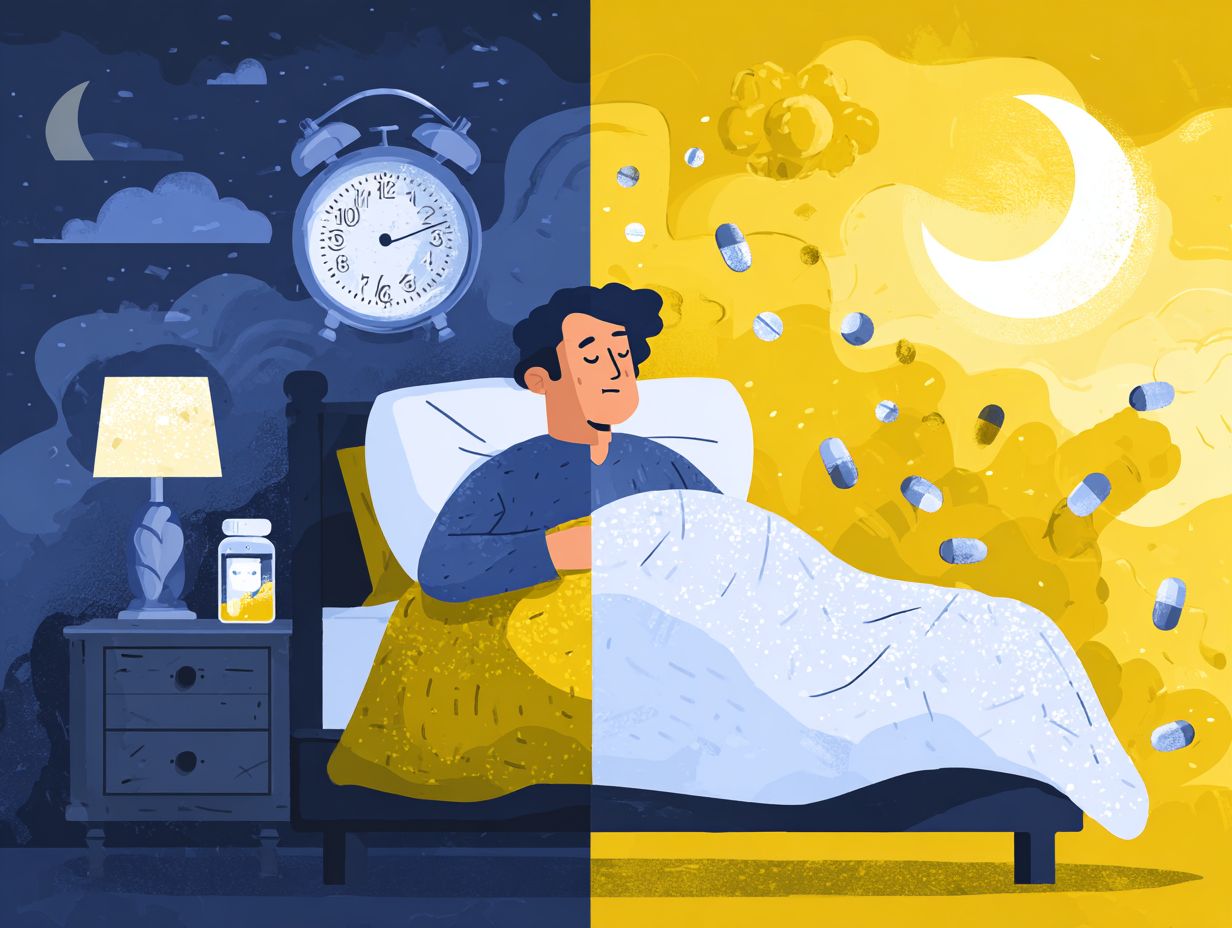
Insomnia really hits home for a lot of us. It’s that frustrating struggle to either fall asleep or stay asleep, and believe it or not, about 30% of adults deal with insomnia at some point in their lives. It can leave me feeling completely drained during the day.
This sleep disorder can vary; sometimes I just have a few rough nights-what they call acute insomnia-but other times it sticks around for months, turning into chronic insomnia. I often find myself taking longer than 30 minutes to drift off, and then I wake up multiple times during the night, which really messes with my restful sleep.
I’ve learned that cognitive behavioral therapy for insomnia (CBT-I) is a pretty effective way to tackle the issue, offering sleep therapy that focuses on behavioral interventions, as it focuses on the thoughts and behaviors that contribute to my sleepless nights.
Plus, I’ve found that sticking to a consistent sleep schedule and creating calming nighttime routines and relaxation techniques can really help me improve my sleep quality, reducing sleep-related anxiety.
Understanding Circadian Rhythm Issues
Circadian rhythm disorders really throw a wrench in my body’s natural clock, messing up the alignment between my sleep patterns and the outside world, often resulting in circadian misalignment. This often leads to me battling chronic insomnia and experiencing fatigue during daytime activities.
It gets even trickier with things like shift work or hopping across time zones. For example, if I’m working the night shift, a common cause of shift work disorder, I struggle to catch some Z’s during the day because my body just wants to be awake at night.
To tackle these issues, I’ve found that using light therapy lamps to mimic daylight when I wake up can be super helpful. I also try to stick to a consistent sleep schedule, as advised by sleep professionals, even on my days off.
It’s all about reinforcing my body’s natural rhythms to promote better sleep quality.
Melatonin: An Overview
Melatonin is this naturally occurring hormone that I’ve learned plays a vital role in sleep neuroscience in managing our sleep-wake cycles through neurotransmitters.
I often see people using melatonin supplements to help with circadian rhythm sleep disorder and other sleep disturbances. It’s pretty interesting how something our bodies produce can be so helpful for getting better rest!
What is Melatonin?
Melatonin is something I produce naturally through my pineal gland when it gets dark outside, which signals my body to get ready for sleep. It’s pretty fascinating how levels peak at night.
When darkness falls, my body kicks up the melatonin production and how it influences hormonal imbalances, acting like a natural signal that it’s time to hit the hay. I like to think of it as a dimmer switch; as the light fades, melatonin fills my system, making me feel all drowsy and cozy.
Typically, my melatonin levels start ramping up around 9 PM, peak at midnight, and then gradually drop off by morning, reflecting the natural sleep onset and sleep maintenance phases.
To make the most of melatonin production, I try to stick to a regular sleep schedule, cut back on screen time at night, and keep my bedroom nice and dark. These little habits help me transition into sleep more smoothly, improving both the quality and duration of my slumber.
How Melatonin Works in the Body
Melatonin works by binding to specific melatonin receptors in my brain, which helps lower my alertness and brings on those sleepy feelings, aiding REM and non-REM sleep. These receptors are mostly found in the suprachiasmatic nucleus (SCN), which plays a big role in regulating my circadian rhythms.
By tweaking the SCN’s activity, melatonin helps me with my sleep-wake cycles, making it much easier to drift off at night, enhancing my resting state.
In terms of taking melatonin for sleep support, I usually go with a dosage between 1 to 3 mg about 30 minutes before I hit the hay. It’s generally pretty well-tolerated, but I’ve heard some people might experience side effects like dizziness, daytime drowsiness, or even some wild dreams.
It’s always a good idea to check in with a doctor before starting melatonin, especially if I’m thinking about using it long-term or alongside other medications.
Insomnia: Causes and Symptoms
Insomnia can hit me for a bunch of reasons, whether it’s psychological stuff or things in my environment that mess with my ability to get that good, restorative sleep, impacting my sleep architecture.
Types of Insomnia
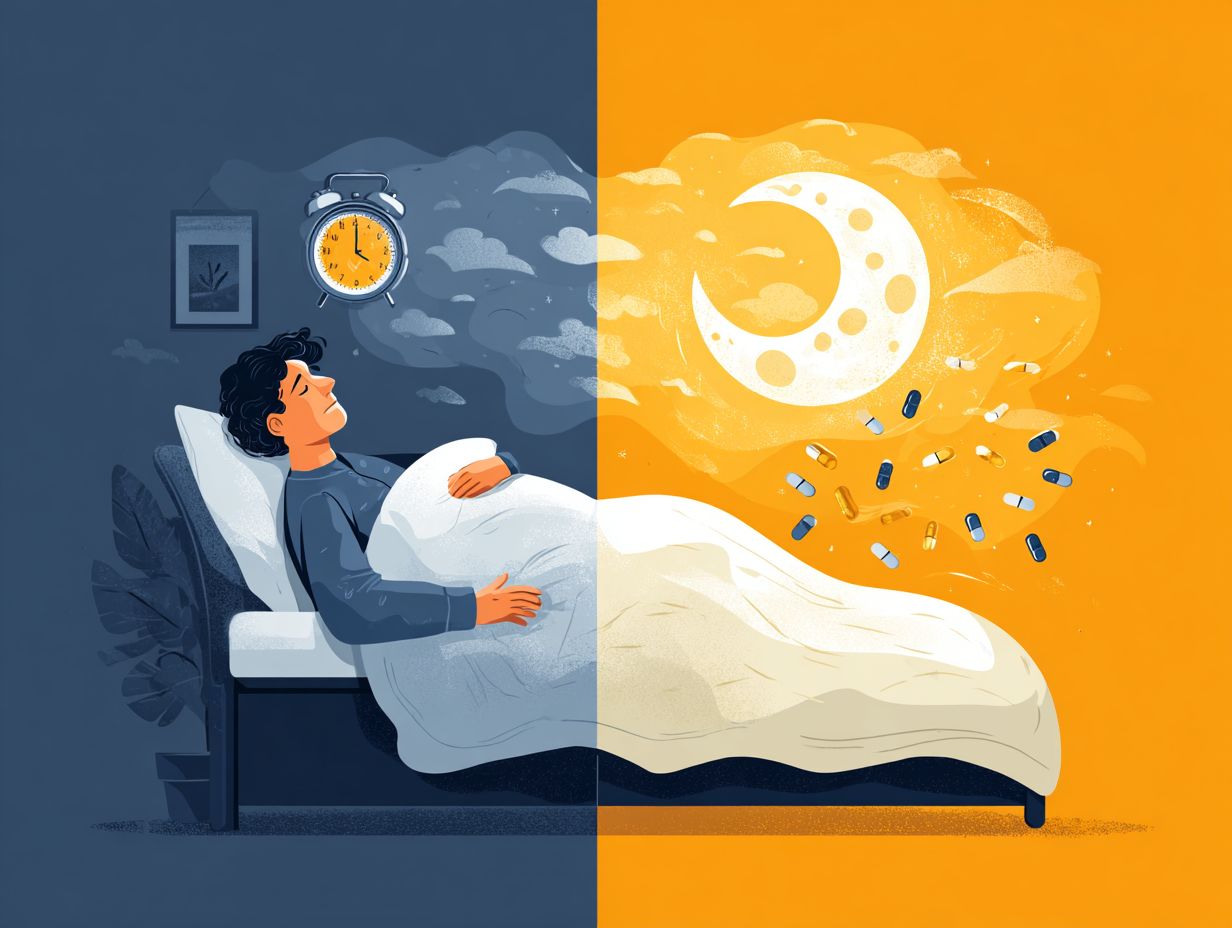
I’ve learned that insomnia comes in a few different flavors, with insomnia causes varying widely. There’s acute insomnia, which is like that annoying guest who only shows up for a short time, and then there’s chronic insomnia, the persistent troublemaker that just doesn’t want to leave.
Acute insomnia usually pops up because of something stressful, like losing a job or going through a big life change, but it tends to resolve itself in days or weeks. On the flip side, chronic insomnia often roots itself in long-term issues, such as anxiety disorders or other medical conditions, sticking around for months or even years.
In terms of tackling acute insomnia, I’ve found that options like cognitive behavioral therapy (CBT) or some temporary medication can help. Chronic insomnia, though, often needs a more well-rounded approach. This usually means making lifestyle changes, sticking to regular sleep schedules, and diving into long-term therapy solutions. And in either case, reaching out to a healthcare professional is a must to get the right guidance.
Impact on Daily Life
The impact of insomnia goes way beyond just feeling tired; it can really mess with my daytime energy, cognitive function, and even my mood. For example, when I’m struggling with insomnia, I find it tough to concentrate at work, which leads to missed deadlines and mistakes. That not only puts a dent in my productivity but can also create some awkward tension with my colleagues.
Chronic sleep deprivation effects often mean I’m more irritable and anxious, which can lead to conflicts at home too. To tackle these effects, I’ve found that implementing a few strategies really helps, like:
- Sticking to a consistent sleep schedule
- Creating a relaxing bedtime routine, recommended by sleep professionals
- Using lifestyle modifications like sleep-tracking apps like Sleep Cycle to keep tabs on my rest patterns, providing insights for sleep architecture assessment and figure out what’s going wrong
These little tweaks make a big difference in my overall well-being.
Circadian Rhythm Disorders: Causes and Symptoms
Circadian rhythm disorders really throw off my internal biological clock, and I end up with all sorts of irregular sleep patterns.
It’s amazing how much this can impact my health and overall well-being, affecting both sleep and mental health as well as sleep and physical health.
Common Circadian Rhythm Disorders
I’ve come to realize that common circadian rhythm disorders can really mess with my sleep. Take shift work disorder, for example. It hits those of us working non-traditional hours pretty hard, and then there’s jet lag, which I definitely feel after those long flights.
With shift work disorder, I often find myself battling insomnia, feeling overly sleepy, and struggling to maintain daytime alertness, which can take a toll on my daily life. Just think about a nurse working night shifts-falling asleep during the day can be a real challenge, leading to fatigue and less alertness on the job.
And jet lag? It throws my sleep patterns all out of whack, leaving me feeling irritable and dealing with some gastrointestinal drama.
Things like irregular sleep schedules and exposure to light can make these issues even worse. I’ve found that using tools like sleep trackers or blue light filters can really help me manage these conditions. They promote better sleep hygiene and contribute to my overall well-being.
Effects on Health and Well-Being
Circadian rhythm disorders can really mess with my health, leading to a bunch of issues like an increased risk for chronic conditions, mood disorders, and even impaired cognitive function.
Research shows that when my circadian rhythms are out of whack, I could be facing a 25% higher chance of developing heart disease, illustrating significant health impacts. Plus, these disruptions are often linked to anxiety and depression, with around 40% of people affected reporting serious mood disturbances and mood regulation difficulties.
To tackle these risks, I’ve found that sticking to a consistent sleep schedule is crucial. I also make sure to use blue light blocking glasses in the evening and create a cozy, restful sleep environment.
On top of that, incorporating habits like regular exercise and mindfulness practices really helps realign my natural rhythms and keeps me feeling healthier overall.
Melatonin’s Role in Sleep Management in Treating Insomnia
I often find that melatonin supplements are recommended as a go-to solution for insomnia, and they really do a great job of helping to regulate sleep patterns effectively.
Effectiveness of Melatonin for Insomnia

I’ve come across some sleep research that shows melatonin can really cut down the time it takes to fall asleep by up to 50% for those of us dealing with insomnia, as long as we take the right melatonin dosage.
For the best results, they say a dose of 1 to 3 mg taken about 30 to 60 minutes before bedtime is the way to go. I’ve learned that it’s smart to start with the lowest effective dose and then adjust if needed.
Timing is also key-taking melatonin too early or too late can really lessen its effectiveness. And let’s not forget about creating the right sleep environment and adhering to sleep hygiene guidelines; keeping the room dark and quiet can really boost how well melatonin works.
By incorporating these tips, I’ve found that sleep quality can improve significantly for anyone battling insomnia, offering a pathway to sleep restoration.
Melatonin’s Role in Circadian Rhythm Disorders
I’ve found that melatonin plays a crucial role in managing circadian rhythm disorders and the associated circadian disruptions.
It really helps me realign my biological clock and get my sleep patterns back on track.
Benefits of Melatonin for Circadian Rhythm Issues
I’ve found that melatonin offers some pretty significant perks for anyone dealing with circadian rhythm disorders. It really helps improve sleep quality and cuts down on that pesky daytime sleepiness, enhancing REM sleep and non-REM sleep phases.
Clinical studies back this up too; they’ve shown that melatonin can effectively help reset the body’s internal clock. For example, there was this study published in the Journal of Clinical Sleep Medicine that found when participants took 3 mg of melatonin before bedtime, they fell asleep an average of 29 minutes faster.
I’ve also noticed how beneficial melatonin can be for those transitioning to night shifts. Workers who took melatonin a few hours before sleep reported feeling more alert during their shifts and a lot less fatigued.
Regularly using melatonin and other natural sleep aids can really help adjust sleep patterns, making it a powerful ally in regulating circadian rhythms.
Limitations of Melatonin and Melatonin Side Effects
I’ve found that while melatonin is super popular, it does have its limitations and isn’t always effective for everyone, often leading to considering other insomnia treatments and pharmacological interventions.
Especially when there are behavioral or environmental factors involved, it might not do the trick.
When Melatonin May Not Help
I’ve learned that melatonin might not do much for chronic insomnia tied to anxiety or depression. In these cases, cognitive behavioral therapy (CBT-I) could actually be a better option.
CBT-I focuses on tackling the thoughts and behaviors that contribute to insomnia, which is one of the many insomnia effects requiring comprehensive treatment options. It offers practical techniques, like sleep restriction, which helps limit the time I spend in bed to boost my sleep drive and mitigate sleep fragmentation.
I also find relaxation techniques and good sleep hygiene practices-like creating a calm sleep environment-to be really helpful. Research shows that people who try CBT-I typically see a significant improvement in their sleep quality and overall mental health.
So, for those of us dealing with insomnia related to anxiety or depression, this approach can be a solid alternative to relying on melatonin.
Key Takeaways
One of the key takeaways for me is recognizing the signs of insomnia, understanding how melatonin plays a role, and exploring all the treatment options out there for better sleep.
To effectively tackle insomnia, I start by identifying my symptoms, like having trouble falling asleep or waking up frequently during the night. Keeping a sleep diary for at least two weeks really helps me track my sleep patterns.
I also think about adding melatonin supplements into the mix; a dose of 0.5 to 5 mg, taken about 30 minutes before bedtime, can really help regulate my sleep cycle as recommended by health guidelines.
And let’s not forget cognitive behavioral therapy (CBT) for insomnia-it’s a proven method that focuses on changing those pesky negative thoughts about sleep, making it one of the top sleep improvement strategies.
Plus, I find that engaging in relaxation techniques like deep breathing or meditation can really help me wind down for a more restful night.
Frequently Asked Questions
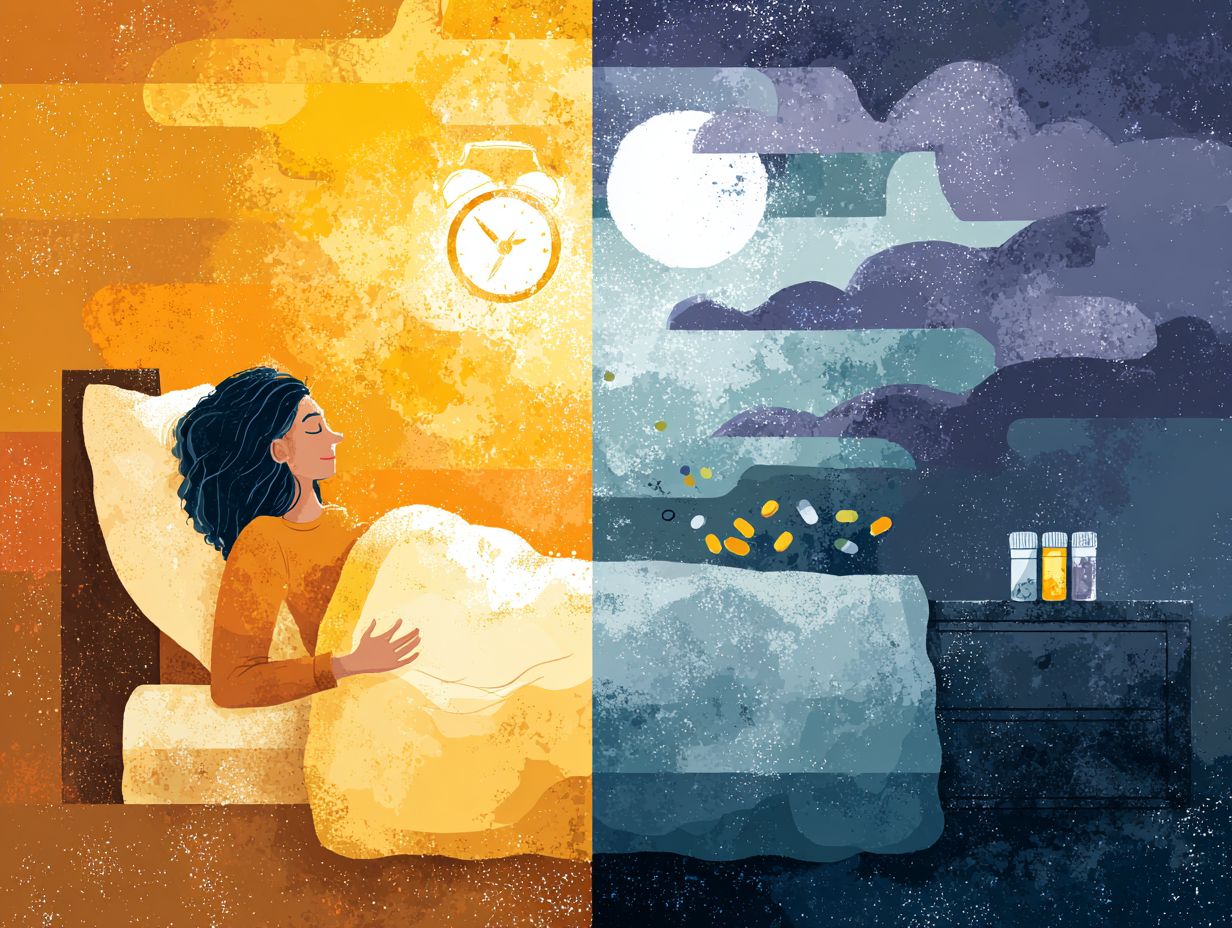
What is the difference between insomnia and circadian rhythm issues?
Insomnia is a sleep disorder characterized by difficulty falling asleep or staying asleep, while circadian rhythm issues refer to disruptions in the body’s natural sleep-wake cycle, as studied in the field of chronobiology.
Can melatonin help with both insomnia and circadian rhythm issues?
Yes, melatonin is a hormone that can help regulate sleep and can be effective in treating both insomnia and circadian rhythm issues.
How does melatonin work to improve sleep?
Melatonin works by regulating the body’s natural sleep-wake cycle, signaling to the brain that it is time to sleep, thus playing a crucial role in sleep quality improvement. It also has a sedative effect, making it easier to fall asleep and stay asleep.
Are there any side effects of using melatonin for sleep?
While generally considered safe, some people may experience side effects such as drowsiness, headache, or dizziness. It is important to consult with a doctor before taking melatonin, especially if you are on any other medications.
Is melatonin safe for long-term use?
The long-term effects of melatonin use are not well-studied, but it is generally considered safe for short-term use. It is important to follow recommended dosages and consult with a doctor if you plan on using melatonin for an extended period of time.
Can melatonin be used to treat other sleep disorders?
Melatonin has been found to be effective in treating other sleep disorders such as jet lag and delayed sleep phase disorder, and it is often recommended after sleep studies in sleep clinics. However, it may not be as effective for certain types of insomnia, such as sleep maintenance insomnia.
- Create a Sleep Journal: Track Sleep Latency & Energy LevelsEver lay awake at night, wondering why you just can’t drift off? I’ve been there too, and that’s what led me to start tracking my sleep. By keeping a sleep journal, I discovered the secrets behind my nightly struggles, from how long it took to fall asleep to those pesky awakenings. Join me as we dive into the world of sleep metrics, learn how to set up an effective sleep journal, and ultimately boost our next-day energy and cognitive function. You’ll never look at sleep the same way again!
Importance of Tracking Sleep Patterns

Tracking my sleep patterns has been a game changer for figuring out issues like insomnia, fatigue, or those pesky midnight awakenings. It really helps me come up with personalized strategies to improve my sleep.
By keeping an eye on specific metrics like how long I sleep, how many times I wake up, and how quickly I fall asleep, I can spot patterns that might be messing with my rest. For instance, using tools like Sleep Cycle or Fitbit gives me some pretty insightful data over time.
I’ve read that consistently keeping track of this stuff can boost sleep quality by up to 20%.
With the insights I gather, I can make simple tweaks, like setting up a calming bedtime routine or cutting back on screen time. These small changes can lead to way more restorative sleep, and honestly, who doesn’t want that?
Understanding Sleep Metrics
I find that understanding key sleep metrics is essential for figuring out how to improve my sleep quality.
It gives me measurable insights that can really make a difference in my overall health and well-being.
Onset Latency Explained
Onset latency is just a fancy way of saying how long it takes me to fall asleep. Ideally, I want that onset latency to be in the sweet spot of 10 to 20 minutes for my sleep health to be on point.
To help reduce that onset latency, I’ve started establishing a calming bedtime routine that lets my body know it’s time to wind down. I’ve found that activities like reading a book, doing some gentle yoga, or even listening to relaxing music really make a difference.
I also try to minimize my screen time for at least an hour before bed, which has been shown to significantly cut down that latency-some studies suggest it can be reduced by up to 15%.
Sticking to a consistent sleep schedule is another game changer for me; I aim to go to bed and wake up at the same times every day. It really helps keep my body’s internal biological clock and circadian rhythm in check.
Awakenings: Frequency and Duration
Frequent awakenings during the night can really throw off my sleep cycles, impact my sleep quality, and leave me feeling groggy, which definitely impacts my overall health. I’ve found that ideally, I should aim for just one or two awakenings per night to enjoy those natural sleep cycles like REM and deep sleep.
To cut down on those pesky nighttime disruptions, I’ve started optimizing my sleep environment. Here’s what I do:
- I keep my bedroom dark and cool.
- I use a white noise machine to drown out any disturbances.
- I made sure to invest in a quality mattress that gives me the support I need.
I’ve also found that employing relaxation techniques, like deep breathing or meditation before bed, can really help me maintain better sleep continuity. Research suggests that by improving my sleep conditions, I could reduce awakenings by up to 20%, which is a game changer for my overall well-being.
Next-Day Energy Levels
Measuring my energy levels and daytime alertness the next day really helps me figure out how well I slept and what adjustments I might need to make for better rest and energy restoration. To get a clear picture of my energy, I like to use both subjective and objective measures.
On the subjective side, I take a moment to think about my mood, focus, and motivation when I wake up. Then there’s the objective part-wearables like my Fitbit can track my sleep stages. For example, if I’m averaging seven hours of sleep but notice my energy dips, it might be because my REM sleep is consistently low.
I’ve read that younger adults, around 18 to 30, often feel more energized with 7 to 9 hours of sleep, while older adults, like those over 60, might need a bit less.
Keeping track of these patterns over time helps me fine-tune my sleep habits for better overall energy.
Setting Up Your Sleep Journal

I’ve found that keeping a well-structured sleep journal is crucial for tracking my sleep metrics and spotting patterns over time.
It really helps me get a better understanding of my sleep habits.
Choosing the Right Format
Choosing between a digital or paper format for my sleep journal can really change the way I track my sleep and stick to it.
If I go with a digital format, like the Sleep Cycle app (which costs about $29.99 a year), it automatically tracks my sleep patterns and gives me insights using some fancy algorithms. But if I opt for a handwritten journal, I get the chance for some personal reflection, allowing me to jot down my feelings and habits beyond just how long I slept.
To figure out what works best for me, I could try each format for a week and see which one feels more intuitive and makes me want to keep up with my entries. This little trial period would give me a firsthand look at the pros and cons, helping me choose the format that fits my sleep tracking and journaling needs the best.
Essential Components to Include
I find that keeping a comprehensive sleep journal is super helpful. I make sure to include key components like sleep duration, how long it takes me to fall asleep, and my daily mood, so I get a well-rounded view of my sleep health and sleep characteristics.
On top of that, I track the date and time I go to bed, give each night a quality rating from 1 to 10, and jot down my energy level for the next day. This structured approach really helps me spot patterns and disturbances over time.
Sometimes, I like to use a template to organize everything, which makes it way easier to stay consistent. I’ve even found that apps like Sleep Cycle or Daylio can automate the whole process, letting me focus on reflecting rather than getting caught up in the nitty-gritty of tracking details manually.
Daily Tracking Techniques
I’ve found that using effective daily tracking techniques really boosts the quality and consistency of the data I record in my sleep journal.
It makes a noticeable difference in how I understand my sleep patterns and overall rest.
Recording Sleep Onset and Awakenings
I find that keeping a close record of when I fall asleep and wake up is super important for figuring out my sleep quality and spotting any patterns over time.
I usually start by writing down the time I head to bed and when I think I actually drift off in my digital sleep journal. I like using a sleep tracking app like Sleep Tracker to make this process easy, but I could just as easily keep a dedicated sleep diary.
Whenever I wake up during the night, I note the time and any potential culprits that might have disturbed my slumber, like noise or discomfort.
At the end of the week, I take some time to review my entries. This helps me notice any trends and make smart changes to my sleeping environment or routine.
Evaluating Next-Day Energy

Evaluating my next-day energy really requires a bit of structure when it comes to logging my daily energy levels and linking them to my sleep data. I like to start my day by rating my energy on a scale from 1 to 10 right after I wake up.
Then I use apps like Sleep Cycle, which not only track my sleep patterns but also give me a nice visual of my energy scores over time.
I compare my energy ratings with how well I slept the night before. For example, if I didn’t get enough sleep (like less than 6 hours), I usually feel a noticeable dip in my energy the next day.
This little correlation helps me figure out the optimal amount of sleep I need, so I can tweak my bedtime routine and sleep hygiene accordingly.
Analyzing Your Sleep Data
I find that analyzing my sleep data is crucial for spotting trends and making smart changes to improve my sleep quality.
Identifying Patterns and Trends
I like to look for recurring patterns in my sleep data, such as those pesky consistent awakenings, sleep disturbances, or changes in how long I’m actually sleeping. This helps me figure out what changes I might need to make.
I often use a sleep tracking app like Sleep Cycle or Fitbit to analyze my data over time. I pay attention to key metrics like total sleep time and sleep efficiency.
By comparing these numbers week by week, I can spot trends that might be tied to my lifestyle choices-like if I’ve been drinking more caffeine or if I’ve changed my exercise routine.
I also think about setting sleep goals based on what I find, like trying to stick to consistent bedtimes, so I can improve my overall sleep quality.
Making Adjustments Based on Insights
I like to use the insights from my sleep analysis to tweak my sleeping habits and routines. I usually start by shifting my bedtime by about 15 to 30 minutes earlier or later, based on what I’ve discovered.
Incorporating some pre-sleep relaxation techniques, like curling up with a good book or practicing deep breathing, has really helped me improve my sleep quality. I’ve found that sticking to a consistent sleep schedule makes a big difference in how restful my nights are.
I try to limit my screen time an hour before bed to cut down on blue light exposure-it’s a game changer for sleep improvement and sleep deprivation management. Plus, I regularly track my sleep patterns with apps like Sleep Cycle or Fitbit to see how my changes are working and to make any further adjustments as needed.
Frequently Asked Questions
What is a sleep journal and why is it important?

A sleep journal is a record of your sleep patterns and habits. It helps you track your sleep onset latency, awakenings, and next-day energy levels. Keeping a sleep journal can provide valuable insights into your sleep quality and help identify any underlying issues that may be affecting your sleep.
How do I track my sleep onset latency with sleep assessment tools?
Sleep onset latency refers to the amount of time it takes for you to transition from wakefulness to non-REM sleep. To track it, simply record the time you go to bed and the time you fall asleep. You can also use a sleep tracking app or device, which are excellent sleep optimization tools, to automatically track your sleep onset latency.
What should I include in my sleep journal for comprehensive sleep monitoring?
Apart from your sleep onset latency, you should also track any awakenings you experience during the night, drowsiness, and your next-day energy levels using sleep notes. You may also want to note down any factors that may have affected your sleep, such as caffeine intake, exercise, melatonin levels, or stress, which can be recorded as part of your sleep checklist.
How often should I update my sleep journal for effective sleep analysis?
The more frequently you update your sleep journal, the more accurate and helpful it will be in your sleep research. Aim to fill it out every morning after you wake up, as this will ensure you capture all the necessary information from the previous night’s sleep, facilitating better sleep management.
What can I learn from tracking my sleep with a journal and practicing self-reflection?
By consistently tracking your sleep patterns and behavioral patterns, you may be able to identify any trends or patterns in your sleep quality. This can help you make adjustments to your sleep habits, evening routine, and improve your overall sleep health with mindfulness practices.
How long should I track my sleep with a journal for accurate wellness tracking?
It is recommended to track your sleep for at least 2-3 weeks to get a good understanding of your sleep patterns and gain personal insights for better sleep education. However, if you have ongoing sleep issues or sleep disorders, it may be beneficial to continue tracking for a longer period of time using advanced sleep analysis tools.
- How Caffeine, Alcohol, and Screens Disrupt Melatonin LevelsEver found yourself wide awake at 2 a.m. scrolling through your phone, regretting that last cup of coffee? I know I have! Caffeine, alcohol, and those late-night screens have a sneaky way of sabotaging our sleep quality and disrupting our sleep patterns. Understanding how these habits clash with our body’s natural melatonin production and circadian rhythm is crucial if we want to wake up refreshed. Let’s dive into how these culprits affect our rest and explore some simple sleep strategies to reclaim our nights.
What is Melatonin?

I’ve learned that melatonin is made in the pineal gland, and its levels really depend on how much light I’m exposed to. It usually starts to rise in the evening and dips down when dawn comes. This cycle is super important for keeping my circadian rhythms in check and helping me fall asleep, ensuring better sleep quality.
I’ve noticed that bright light in the evening can really mess with melatonin production, which is a major culprit for insomnia. On the flip side, when it gets dark, my body releases more melatonin, hitting peak levels around 2 a.m.
It’s pretty interesting to know that melatonin has a half-life of about 30 to 50 minutes in my bloodstream, which highlights why I need to maintain a consistent sleeping environment.
To boost my melatonin levels naturally, I try dimming the lights about an hour before bed and cutting back on screen time. It’s made a noticeable difference in my sleep quality.
The Role of Melatonin in Sleep
Melatonin is my go-to signal that it’s time to hit the hay, acting as a natural sleep aid. It really helps me regulate my sleep-wake cycle and boosts my overall sleep quality and sleep efficiency. I’ve read that taking melatonin supplements can actually cut down the time it takes to fall asleep, reducing sleep latency, which is a game-changer for me.
In a meta-analysis I stumbled upon regarding insomnia, participants who took melatonin reported falling asleep significantly faster than those on a placebo. Pretty convincing, right? It seems like melatonin also helps enhance the overall structure of my sleep, letting me enjoy longer stretches of REM sleep, which is crucial for feeling rested and recharged.
For anyone dealing with sleep issues like delayed sleep phase syndrome, it looks like taking a dose of 0.5 to 5 mg about 30 minutes before bed can really help. Of course, I always make sure to chat with a healthcare provider before diving into any kind of supplementation.
Impact of Caffeine on Sleep
I know caffeine is a popular go-to stimulant for many of us, but I’ve realized that if it’s not managed properly, it can really mess with my sleep quality and sleep duration.
Caffeine’s Mechanism of Action
Caffeine works mainly by blocking adenosine receptors in my brain, which helps me avoid those pesky feelings of tiredness and can even delay when I feel ready to sleep, affecting my biological clock. When I have caffeine, it goes head-to-head with adenosine-a neurotransmitter that tells my body it’s time to snooze-binding to its receptors but not activating them. This little trick is what keeps me feeling more alert and awake.
I’ve noticed that the half-life of caffeine is around 5-6 hours, which means if I drink it too late in the day, it can mess with my nighttime sleep and keep me feeling wide awake when I want to wind down.
To keep that from happening, I try to limit my caffeine intake after 2 PM, especially if I’m aiming to hit the hay by 10 PM, optimizing my sleep environment. It’s been helpful to experiment with cutting back gradually to see how it affects my sleep quality.
Timing and Consumption Patterns
Consuming caffeine within six hours of bedtime can really mess with my sleep quality and even crank up insomnia symptoms if I’m sensitive to it. So, I’ve learned that timing is everything when it comes to my caffeine intake.
I try to have my last cup of coffee by 2 PM, especially if I plan to hit the hay around 10 PM.
If I’m looking for something warm to sip in the evening, I go for herbal teas like chamomile or peppermint. They help calm my mind without throwing my sleep off track.
I also keep track of my caffeine habits using apps like MyFitnessPal. It’s a helpful way to understand my consumption patterns and how they affect my rest.
In the end, listening to my body and making adjustments as needed has really helped me improve my sleep quality and personal health.
Effects of Alcohol on Sleep Quality

I’ve noticed that while alcohol might help me fall asleep faster, it usually ends up messing with my sleep patterns.
Instead of getting a good night’s rest, I find myself tossing and turning, which really cuts down on the overall quality of my sleep, leading to sleep deprivation.
How Alcohol Disrupts Sleep Cycles
I’ve noticed that drinking alcohol can really mess with my sleep. It tends to decrease REM sleep and makes it more likely that I’ll wake up during the night, which means I’m not getting that restorative sleep I need.
There’s some interesting research out there that shows even moderate drinking can cut REM sleep by up to 20%. For example, a study published in “Alcoholism: Clinical & Experimental Research” found that people who had a drink before bed often ended up with fragmented sleep, waking up more frequently throughout the night.
This disruption doesn’t just impact how rested I feel; it also affects my cognitive function and mood the next day. I find myself struggling with memory and feeling more irritable.
To tackle these issues, I try to limit my alcohol intake, especially in the hours leading up to bedtime, and I make it a point to stick to a regular sleep routine to help improve my overall sleep quality.
Short-Term vs. Long-Term Effects
I’ve noticed that while alcohol might help me feel sleepy in the short term, using it regularly is a different story. It’s heavily linked to chronic sleep disturbances and other health risks.
I mean, regular drinking can really mess with my body’s circadian rhythm, which leads to fragmented sleep and issues like insomnia. In fact, studies show that about 70% of heavy drinkers experience sleep disorders.
With time, I’ve learned that too much alcohol can not only cut down on REM sleep-which is super important for my mental health-but it can also make anxiety and depression worse.
To counteract these effects, I’ve started exploring alternatives like herbal teas or melatonin supplements. They help promote better sleep quality without the long-term downsides that come with alcohol.
Influence of Late-Night Screen Time
I’ve noticed that increasing my screen time before bed really impacts my sleep quality, all thanks to the blue light that devices emit.
Blue Light and Melatonin Suppression
I’ve learned that exposure to blue light in the evening can really mess with melatonin production, making it harder for me to fall asleep, impacting sleep architecture. Research suggests that if I limit my blue light exposure two to three hours before bed, I can actually improve my sleep quality.
To tackle this, I think about using blue light blocking glasses. They filter out the harmful wavelengths and let the good stuff through, which is pretty neat.
I also like the idea of installing apps like f.lux on my devices. They adjust the screen brightness and color temperature depending on the time of day.
When I put these strategies together, I can create a much better sleep environment, which means I might just drift off to dreamland a little earlier and wake up feeling well-rested.
Recommended Screen Time Guidelines

To promote better sleep hygiene, I find it really helps to limit my screen time at least an hour before bed. Instead of scrolling through my phone or binge-watching shows, I like to engage in relaxing activities that enhance my evening routine, promoting healthy sleep habits. Reading a physical book or listening to some calming music helps me unwind, reducing psychological effects of screen exposure.
I’ve also discovered that gentle yoga or meditation can work wonders in reducing stress and getting my mind ready for sleep.
To make this transition easier, I set a nightly alarm for an hour before bedtime. It’s a great little reminder to turn off my devices and switch to these healthier alternatives. Over time, I’ve definitely noticed an improvement in the quality of my sleep and my overall well-being.
Strategies for Better Sleep Hygiene
I’ve found that implementing effective sleep hygiene strategies can really make a difference in my sleep quality and overall well-being.
Reducing Caffeine and Alcohol Intake
I’ve found that cutting back on caffeine and alcohol, especially in the hours leading up to bedtime, really helps me fall asleep faster and improves the overall quality of my sleep.
To effectively reduce my caffeine intake, I’ve started swapping my usual coffee for herbal teas like chamomile or peppermint, which are naturally caffeine-free. I try to stop any caffeine by early afternoon so it doesn’t keep me up at night.
Regarding alcohol, I’ve been experimenting with non-alcoholic alternatives like sparkling water infused with fruit or some tasty herbal mocktails. I also make it a point to put down any beverages at least three hours before I hit the hay.
I’ve read that cutting these substances can actually lead to a 20% improvement in sleep quality, and honestly, these little adjustments are totally worth it.
Managing Screen Time Before Bed
Establishing a screen-free wind-down period has really helped me signal to my body that it’s time to get ready for sleep. To create an effective wind-down routine, I’ve started to implement a few specific actions.
- I set a screen time limit using apps like Stay Focused or Forest. These tools help manage technology usage and improve my sleep hygiene by tracking and restricting my usage after a certain hour, which is a game changer.
- I make sure to carve out at least 30 minutes before bed for relaxing activities. I love diving into a good book, practicing some gentle yoga, or meditating. This transition not only cuts down on blue light exposure but also calms my mind, which really boosts my sleep quality and helps regulate my circadian rhythm.
I’ve found that experimenting with different activities helps me figure out what really helps me unwind the best, ultimately enhancing my sleep duration and reducing sleep latency.
Summary of Key Takeaways
The journey to better sleep for me involves understanding melatonin’s role, managing my caffeine and alcohol intake, and cutting down on late-night screen time. These lifestyle choices are crucial for maintaining a healthy sleep-wake cycle and preventing sleep disorders such as insomnia. I’ve found that having a consistent bedtime routine really helps signal to my body that it’s time to wind down.
I like to take a warm bath or dive into a good book to help me relax, which is essential for maintaining my sleep architecture and ensuring restorative sleep.
Creating a sleep-friendly environment is also key. I keep my bedroom cool, dark, and quiet, which is vital for sleep optimization. Blackout curtains work wonders for blocking out light, and a white noise machine really helps mask any disruptive sounds that might wake me up, improving my sleep efficiency.
I try to limit my caffeine intake after 2 PM and steer clear of alcohol close to bedtime because both can really mess with my sleep quality and disrupt my circadian rhythm, leading to sleep deprivation and restlessness. Making these little changes has done wonders for my nightly rest.
Frequently Asked Questions

1. What is melatonin and how does it affect our sleep?
Melatonin is a hormone that helps regulate our sleep-wake cycle and is produced naturally in our bodies. It plays a significant role in managing our biological clock and maintaining hormonal balance for optimal sleep quality. It is important for promoting deep, restful sleep and ensuring a healthy sleep schedule, which is integral to overall mental health and cognitive function.
2. How does caffeine disrupt our melatonin levels?
Caffeine is a stimulant that can delay the release of melatonin in the body, making it harder to fall asleep and disrupting our natural sleep patterns. Consuming caffeine too close to bedtime can significantly decrease the quality and duration of our sleep, negatively impacting sleep architecture and sleep patterns.
3. Does alcohol have an impact on melatonin production?
Yes, alcohol can also interfere with melatonin production and disrupt our sleep patterns. While alcohol initially acts as a sedative and may make it easier to fall asleep, it can disrupt the natural release of melatonin, leading to poorer quality sleep and potential substance use issues.
4. Are late-night screens really that harmful to our melatonin production?
Yes, the blue light emitted from electronic screens, such as phones, computers, and TVs, can suppress the production of melatonin and make it harder to fall asleep. It is best to avoid screens at least 30 minutes before bedtime to promote healthy melatonin levels and avoid the negative effects of blue light exposure on sleep efficiency.
5. Can changing our habits with caffeine, alcohol, and screens improve our melatonin levels?
Absolutely! By limiting or avoiding caffeine and alcohol close to bedtime and reducing screen time at night, we can promote a more natural release of melatonin and improve the quality of our sleep, enhancing our overall sleep hygiene and sleep patterns.
6. Is there any way to counteract the negative effects of caffeine, alcohol, and screens on melatonin?
One way to counteract these habits is to establish a consistent sleep schedule and create a relaxing bedtime routine, which can act as effective sleep interventions. This can help regulate melatonin levels and promote better sleep, supporting the body’s natural circadian rhythm and reducing sleep disruption. Additionally, some natural supplements, such as melatonin itself, can help promote healthy sleep patterns and improve sleep duration and sleep quality assessment. However, it’s always best to consult with a healthcare professional before taking any supplements.
- Relaxation Techniques: Pair Breathing & Stretching with MelatoninDo you ever find yourself tossing and turning, wishing for a peaceful night’s sleep? I get it! While melatonin gummies can be a great start, I’ve discovered that pairing them with some simple breathing, stretching, and relaxation techniques can elevate your bedtime routine. From diaphragmatic breathing to gentle yoga poses, I’ll share how these practices can transform your nights. Ready to dive into a world of better sleep? Let’s explore together!
Understanding Melatonin’s Role
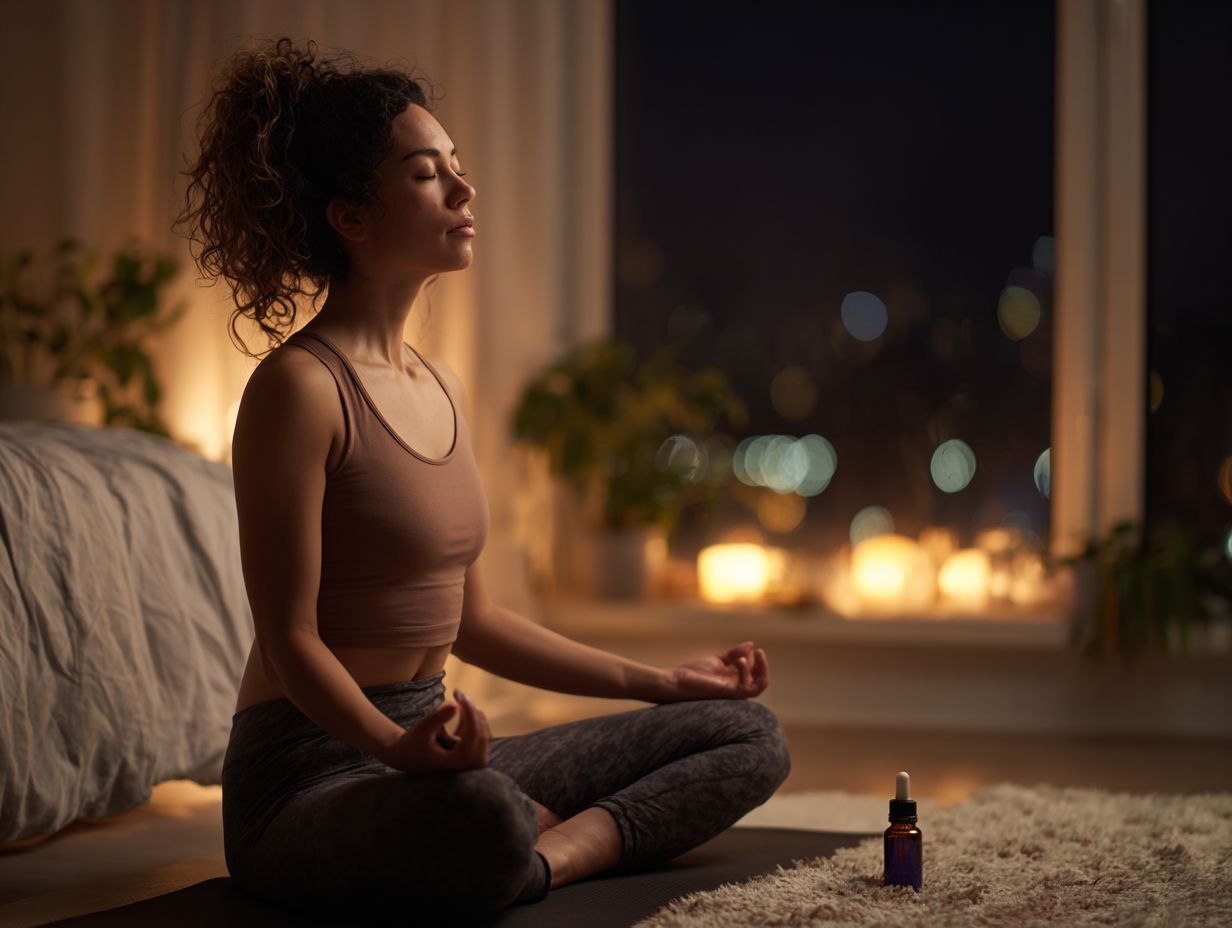
Melatonin is a hormone that my pineal gland produces, and it’s mainly in charge of keeping my circadian rhythms and sleep-wake cycles in check. As the evening rolls in and darkness sets, my melatonin levels typically rise, sending my body a signal that it’s time to wind down and get ready for sleep.
I’ve read that melatonin peaks around 2 a.m., and that’s when my sleep quality really gets a boost.
I’ve noticed that if I’m exposed to bright lights before bed, it can mess with my melatonin production, throwing my sleep patterns out of whack. So, I try to dim the lights about an hour before I hit the hay or use blackout curtains to create a cozy sleep environment.
Sometimes, I even reach for melatonin supplements-like those tasty gummies or capsules-especially when my sleep schedule is all over the place. These sleep aids are an essential part of my routine. They help me get that extra support I need for a good night’s rest, enhancing my sleep environment for peaceful sleep.
Common Sleep Issues Addressed
I’ve found that melatonin can really help with a bunch of common sleep problems like insomnia, delayed sleep phase syndrome, and shift work sleep disorder. Insomnia is a real pain and affects nearly 30% of adults, causing all sorts of trouble when it comes to falling asleep or staying asleep.
Then there’s delayed sleep phase syndrome, which throws a wrench in my sleep schedule and makes waking up early feel like an Olympic event. And for those who work unconventional hours, shift work sleep disorder can really disrupt normal sleep patterns.
I’ve read that melatonin supplementation can cut down sleep onset time by up to 50% and improve sleep quality by about 20%. So, I usually aim to take somewhere between 0.5 to 5 mg of melatonin about an hour before I hit the hay to help kickstart my sleep and get some good restorative rest.
Breathing Techniques for Relaxation
I find that breathing techniques are a fantastic way to boost relaxation and get my body ready for sleep, contributing to my overall wellness and mental health.
They really help improve my overall sleep quality.
Diaphragmatic Breathing
Diaphragmatic breathing, which I also like to call abdominal or deep breathing, is a great technique that helps me get a full exchange of oxygen and promotes relaxation.
When I practice diaphragmatic breathing, I start by getting into a comfortable position, whether I’m sitting or lying down. I place one hand on my chest and the other on my abdomen.
Then, I inhale slowly through my nose, making sure to expand my diaphragm instead of my chest-I’m aiming for a nice count of four seconds, practicing mindfulness breathing techniques. After holding that breath for a moment, I exhale slowly through my mouth for about six seconds, really feeling my abdomen fall.
This technique does wonders for lowering my heart rate and reducing anxiety by kicking in my body’s relaxation response, aiding in deep relaxation. I try to dedicate about five minutes to this practice each day for the best results.
4-7-8 Breathing Method
The 4-7-8 breathing method is my go-to trick for quickly relaxing and getting ready for sleep. It’s super simple but really effective for stress management. Here’s how I do it:
- First, I exhale fully through my mouth.
- Then, I close my mouth and quietly inhale through my nose for about four seconds.
- After that, I hold my breath for seven seconds, feeling my chest expand.
- Next, I exhale completely through my mouth over eight seconds, making a nice whooshing sound.
- I like to repeat this cycle four times.
Sometimes, I use a timer to keep myself focused and aim for around five minutes at first. This method really helps me reduce stress, lower my heart rate, and feel a sense of calm, making it the perfect addition to my nightly routine, promoting a tranquil environment.
Stretching Techniques to Enhance Sleep
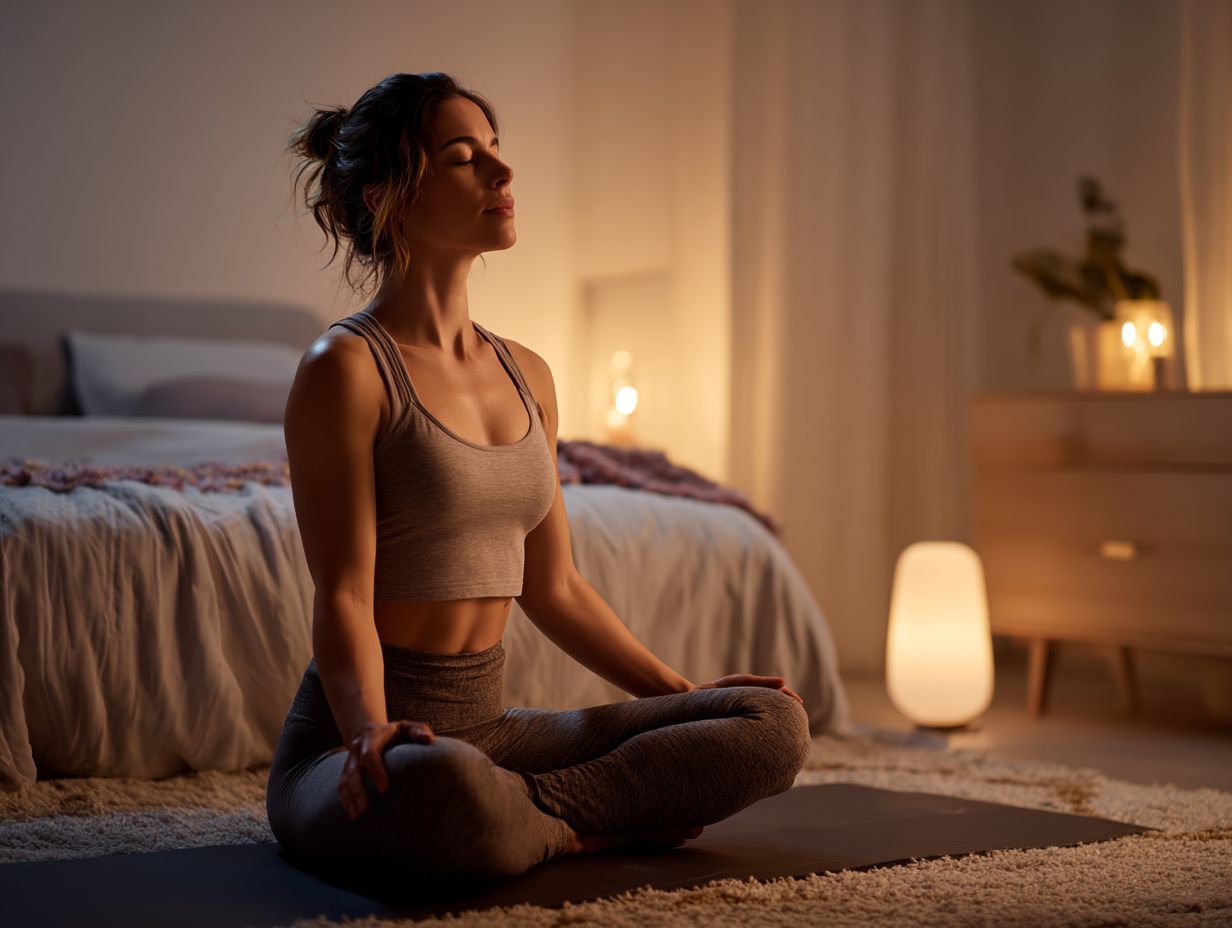
I’ve found that adding some stretching techniques to my evening routine really helps me relax and improves my sleep quality.
Gentle Yoga Poses
Gentle yoga poses can really help calm my nervous system and get my body ready for a good night’s sleep by releasing tension and promoting relaxation. If I’m looking for an effective evening routine, I like to consider these gentle yoga poses:
- Child’s Pose: I sit back on my heels and extend my arms forward. I hold this for about 2-3 minutes, focusing on my breath to release any tension in my back.
- Legs-Up-the-Wall Pose: I lie on my back and extend my legs up against the wall. I stay here for 5-10 minutes to encourage blood flow and relieve that pesky fatigue.
- Seated Forward Bend: I sit with my legs extended and reach for my toes, holding this stretch for 3-5 minutes. It’s great for stretching my spine and calming my mind.
Practicing these poses for about 15-20 minutes each night really helps me relax and improves my sleep quality, offering restorative stretches and yoga nidra.
Static Stretching for Relaxation
I’ve found that doing some static stretching before bed really helps me reduce muscle tension and relax, making it easier to drift off to sleep. I like to incorporate a simple routine of stretches, holding each position for about 20 to 30 seconds.
Here are the muscle groups I focus on:
- For my hamstrings, I sit down and reach for my toes.
- For my quadriceps, I stand up and pull my heel towards my glute.
- For my shoulders, I cross one arm over my chest, focusing on achieving emotional balance and tension relief.
Sometimes, I’ll even play some calming music at a low volume while I stretch. This combo not only eases any tightness in my muscles but also sets a peaceful vibe that really helps me wind down for the night.
Combining Techniques for Better Sleep
I’ve found that combining breathing exercises, stretching, and melatonin can really create a powerful pre-sleep routine.
It does wonders for my overall sleep quality.
Creating a Pre-Sleep Routine
Crafting a consistent pre-sleep routine really helps me signal to my body that it’s time to wind down and get ready for a good night’s sleep, an essential part of sleep hygiene and self-care. I usually start my wind-down process about an hour before bed.
I’ll kick things off with some deep breathing exercises for 5-10 minutes. I take a deep breath in, hold it for a moment, and then exhale slowly.
After that, I like to do some gentle stretching to release the tension in my muscles, focusing especially on my neck and shoulders.
Once I’ve stretched out, I might take 3mg of melatonin about 30 minutes before I plan to sleep. This little combo helps lower my heart rate and get my mind ready for a peaceful night. I’ve found that consistency is key, so I try to stick to this routine every night for the best results.
Timing and Sequencing of Activities
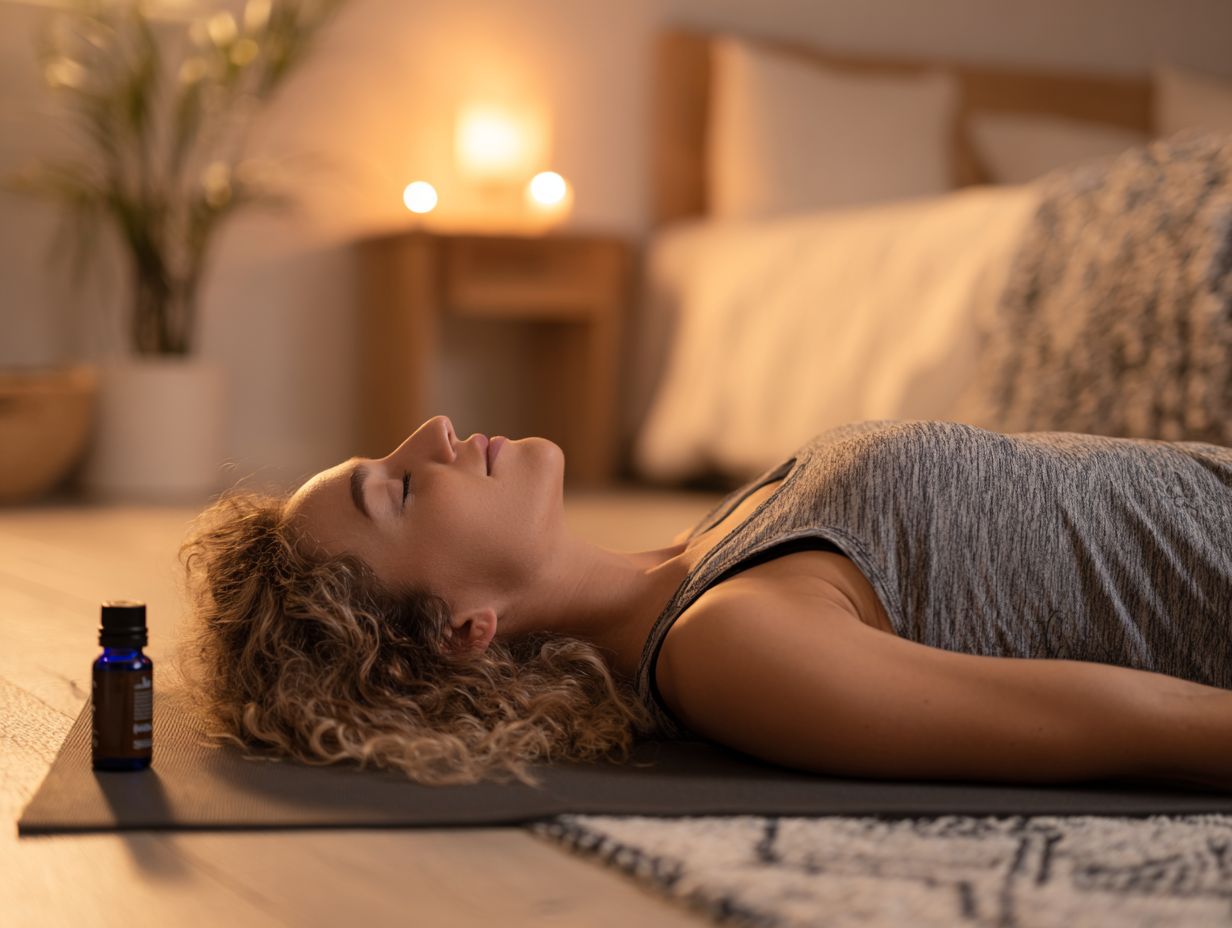
I’ve found that the timing and order of my relaxation activities can really make a difference in how well I sleep. To get the most out of my wind-down routine, I aim to start relaxing about 90 minutes before I hit the sack.
- First up, I dive into some breathing exercises for about 10 minutes, focusing on deep, slow breaths. It really helps set the mood.
- Then, around 30 minutes before I plan to sleep, I take some melatonin-usually between 0.5 and 5 mg-because I’ve noticed its effects kick in about 60 minutes after I take it, supporting circadian health.
- Finally, I spend the last 20 minutes doing gentle stretches, especially for those tight spots in my neck and shoulders.
This little structure not only gets my body ready for sleep but also helps me create a consistent nighttime ritual.
Additional Relaxation Practices
Besides just breathing and stretching, I’ve found that there are several other relaxation practices that can really boost my sleep experience and help me feel less anxious, including soothing sounds and aromatherapy.
Meditation and Mindfulness
I’ve found that meditation and mindfulness practices can really help quiet my mind and create that relaxed vibe I need for a good night’s sleep, integrating cognitive relaxation and guided imagery. To weave mindfulness meditation into my evening routine, I like to try out a few specific exercises.
- First up, I focus on deep breathing: I inhale for four counts, hold it for four, and then exhale for six. It’s surprisingly calming!
- I also enjoy doing a body scan, where I pay attention to each part of my body, letting go of tension as I go along, enhancing body awareness.
When I want a bit more guidance, I turn to apps like Headspace (which is about $12.99 a month) and Calm (around $14.99 a month). They have fantastic resources specifically designed for sleep meditation. I definitely consider using these tools to boost my relaxation game, making it so much easier to drift off at night.
Progressive Muscle Relaxation
Progressive muscle relaxation is one of my go-to techniques for shaking off physical tension. It’s pretty simple: I tense up each muscle group and then let it go, which really helps release all that built-up stress.
I usually start by finding a quiet spot where I can focus without interruptions. Then I kick things off with my feet. I tense the muscles for about five seconds, and then I relax for 30 seconds while taking some deep breaths.
From there, I move up to my calves, thighs, abdomen, and keep going all the way up to my face. I like to spend about a minute on each muscle group, which means the whole session takes me around 15 to 20 minutes.
I’ve found that this practice can really help lower anxiety and improve my sleep quality. It promotes a sense of calm and awareness, making it perfect for managing daily stress and enhancing emotional wellbeing.
Integrating Calming Techniques into Daily Life
Incorporating relaxation techniques into my daily life takes a bit of consistency and mindfulness, but I know it can lead to some lasting changes. I like to start by carving out a specific time each day, even if it’s just for 10 minutes, to practice mindfulness, breath awareness, or some deep breathing exercises.
Using apps like Calm or Headspace is a game-changer for me-they offer guided sessions that are perfect for beginners, enhancing my sleep support. I also make sure to create a calming environment: I dim the lights, eliminate noise, and sometimes even diffuse some lavender essential oil to set the mood for sensory relaxation.
Keeping a journal has been really helpful too. I jot down my progress and how I feel after each practice, which helps me connect more deeply to my relaxation journey. Over time, I’ve noticed that these small actions, combined with lifestyle habits and holistic wellness, can significantly boost my overall well-being.
Final Thoughts on Sleep Health

I’ve learned that prioritizing sleep health is crucial for both my emotional and physical well-being, and using a few handy relaxation response techniques can really help me get a more restful night’s sleep.
To boost my sleep quality, I’ve found that establishing a bedtime routine works wonders. About an hour before I hit the hay, I dim the lights to signal to my body that it’s time to wind down. Instead of scrolling through my phone, I dive into a good book or do some gentle physical stretches. I try to limit my screen time because I know that blue light can mess with my melatonin production and impact my digital wellness.
I also like to use tools like the Sleep Cycle app to track my sleep patterns and optimize my rest. Creating a cool and dark sleep-supportive environment is key too; I’ve noticed a significant improvement in my sleep quality by using blackout curtains and a white noise machine. It really makes a difference!
Frequently Asked Questions
What are some breathing techniques that can be paired with melatonin for better sleep support?
Some breathing techniques that can be paired with melatonin include deep belly breathing, alternate nostril breathing, and 4-7-8 breathing. These techniques can help calm the mind and relax the body, promoting better sleep when paired with melatonin.
Can physical stretches before bed help improve the effectiveness of melatonin?
Yes, stretching before bed can help improve the effectiveness of melatonin. Incorporating gentle stretches into your bedtime routine can help relax tense muscles and prepare your body for sleep, making melatonin more effective.
Are there specific holistic relaxation techniques that work well with melatonin?
Yes, there are many relaxation techniques that work well with melatonin. Some examples include progressive muscle relaxation, visualization, and body scan meditation. Experiment to find the technique that works best for you.
Is it necessary to take melatonin with herbal supplements or gummies, or can it be taken alone?
Melatonin can be taken alone without gummies. While gummies may be a popular and convenient option, melatonin can also be found in tablet, capsule, or liquid form. It is important to follow the recommended dosage for whichever form you choose.
How long should I wait after taking melatonin before engaging in relaxation techniques?
It is generally recommended to wait at least 30 minutes after taking melatonin before starting relaxation techniques. This allows enough time for the melatonin to be absorbed into your system and start promoting drowsiness.
Can these relaxation techniques be used for better sleep even without taking melatonin?
Yes, these breathing, stretching, and relaxation techniques can be used for better sleep even without taking melatonin. They are beneficial practices to incorporate into your bedtime routine and can help promote relaxation and better sleep on their own.
About the Author
Bill Williamson founded this site after too many late-night rabbit holes and confusing labels. His goal is clear, no-hype guidance you can use tonight — practical tips, simple math, and evidence-aware summaries. Read Bill’s full bio.
Get New Guides by Email
We send occasional, useful updates — no spam, no noise.
Subscribe to the Best Melatonin Gummies Guide
Important: Everything here is for educational purposes only and is not a substitute for professional medical advice, diagnosis, or treatment. Always consult a licensed clinician before starting or combining melatonin, CBD, or any supplement — especially if you’re pregnant/nursing, managing a health condition, or taking medications.
Last updated: August 15, 2025