
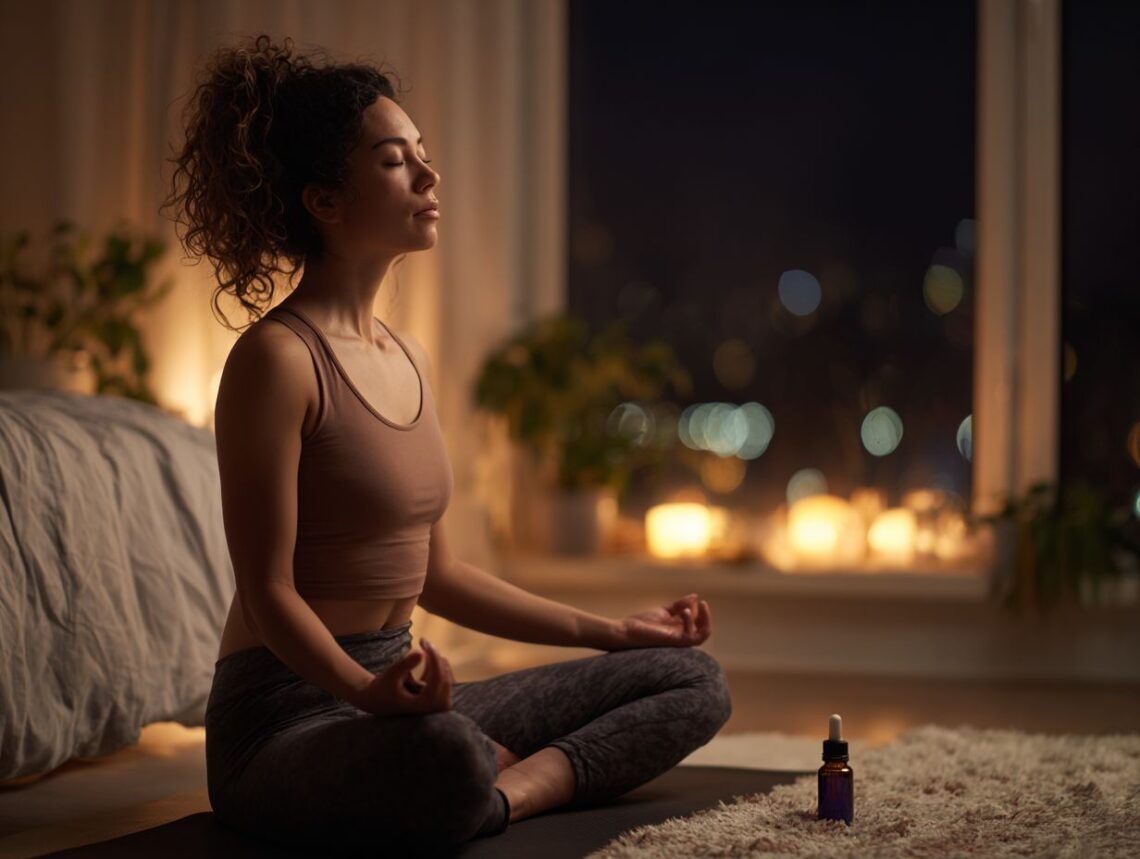
Do you ever find yourself tossing and turning, wishing for a peaceful night’s sleep? I get it! While melatonin gummies can be a great start, I’ve discovered that pairing them with some simple breathing, stretching, and relaxation techniques can elevate your bedtime routine. From diaphragmatic breathing to gentle yoga poses, I’ll share how these practices can transform your nights. Ready to dive into a world of better sleep? Let’s explore together!
Understanding Melatonin’s Role
Melatonin is a hormone that my pineal gland produces, and it’s mainly in charge of keeping my circadian rhythms and sleep-wake cycles in check. As the evening rolls in and darkness sets, my melatonin levels typically rise, sending my body a signal that it’s time to wind down and get ready for sleep.
I’ve read that melatonin peaks around 2 a.m., and that’s when my sleep quality really gets a boost.
I’ve noticed that if I’m exposed to bright lights before bed, it can mess with my melatonin production, throwing my sleep patterns out of whack. So, I try to dim the lights about an hour before I hit the hay or use blackout curtains to create a cozy sleep environment.
Sometimes, I even reach for melatonin supplements-like those tasty gummies or capsules-especially when my sleep schedule is all over the place. These sleep aids are an essential part of my routine. They help me get that extra support I need for a good night’s rest, enhancing my sleep environment for peaceful sleep.
Common Sleep Issues Addressed
I’ve found that melatonin can really help with a bunch of common sleep problems like insomnia, delayed sleep phase syndrome, and shift work sleep disorder. Insomnia is a real pain and affects nearly 30% of adults, causing all sorts of trouble when it comes to falling asleep or staying asleep.
Then there’s delayed sleep phase syndrome, which throws a wrench in my sleep schedule and makes waking up early feel like an Olympic event. And for those who work unconventional hours, shift work sleep disorder can really disrupt normal sleep patterns.
I’ve read that melatonin supplementation can cut down sleep onset time by up to 50% and improve sleep quality by about 20%. So, I usually aim to take somewhere between 0.5 to 5 mg of melatonin about an hour before I hit the hay to help kickstart my sleep and get some good restorative rest.
Breathing Techniques for Relaxation
I find that breathing techniques are a fantastic way to boost relaxation and get my body ready for sleep, contributing to my overall wellness and mental health.
They really help improve my overall sleep quality.
Diaphragmatic Breathing
Diaphragmatic breathing, which I also like to call abdominal or deep breathing, is a great technique that helps me get a full exchange of oxygen and promotes relaxation.
When I practice diaphragmatic breathing, I start by getting into a comfortable position, whether I’m sitting or lying down. I place one hand on my chest and the other on my abdomen.
Then, I inhale slowly through my nose, making sure to expand my diaphragm instead of my chest-I’m aiming for a nice count of four seconds, practicing mindfulness breathing techniques. After holding that breath for a moment, I exhale slowly through my mouth for about six seconds, really feeling my abdomen fall.
This technique does wonders for lowering my heart rate and reducing anxiety by kicking in my body’s relaxation response, aiding in deep relaxation. I try to dedicate about five minutes to this practice each day for the best results.
4-7-8 Breathing Method
The 4-7-8 breathing method is my go-to trick for quickly relaxing and getting ready for sleep. It’s super simple but really effective for stress management. Here’s how I do it:
- First, I exhale fully through my mouth.
- Then, I close my mouth and quietly inhale through my nose for about four seconds.
- After that, I hold my breath for seven seconds, feeling my chest expand.
- Next, I exhale completely through my mouth over eight seconds, making a nice whooshing sound.
- I like to repeat this cycle four times.
Sometimes, I use a timer to keep myself focused and aim for around five minutes at first. This method really helps me reduce stress, lower my heart rate, and feel a sense of calm, making it the perfect addition to my nightly routine, promoting a tranquil environment.
Stretching Techniques to Enhance Sleep
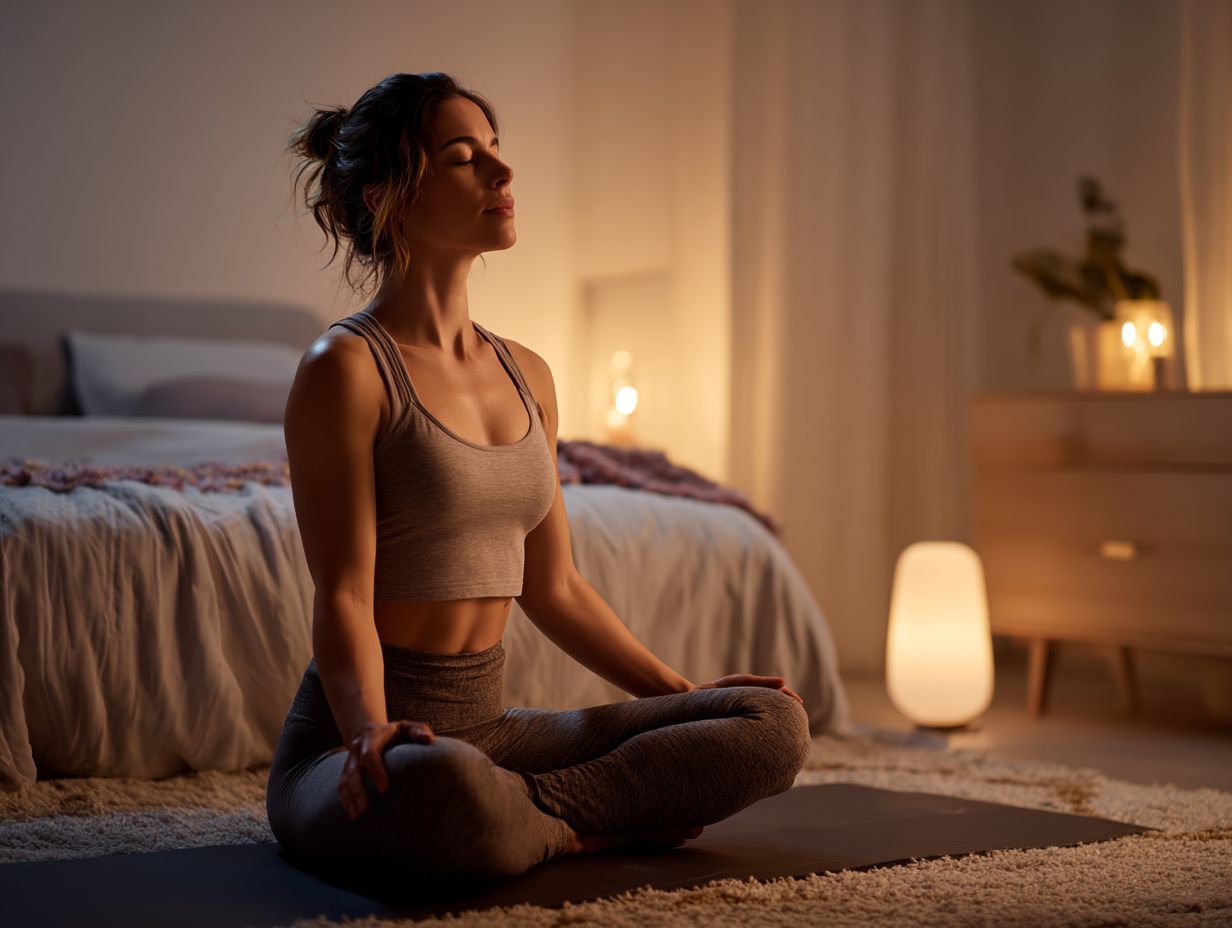
I’ve found that adding some stretching techniques to my evening routine really helps me relax and improves my sleep quality.
Gentle Yoga Poses
Gentle yoga poses can really help calm my nervous system and get my body ready for a good night’s sleep by releasing tension and promoting relaxation. If I’m looking for an effective evening routine, I like to consider these gentle yoga poses:
- Child’s Pose: I sit back on my heels and extend my arms forward. I hold this for about 2-3 minutes, focusing on my breath to release any tension in my back.
- Legs-Up-the-Wall Pose: I lie on my back and extend my legs up against the wall. I stay here for 5-10 minutes to encourage blood flow and relieve that pesky fatigue.
- Seated Forward Bend: I sit with my legs extended and reach for my toes, holding this stretch for 3-5 minutes. It’s great for stretching my spine and calming my mind.
Practicing these poses for about 15-20 minutes each night really helps me relax and improves my sleep quality, offering restorative stretches and yoga nidra.
Static Stretching for Relaxation
I’ve found that doing some static stretching before bed really helps me reduce muscle tension and relax, making it easier to drift off to sleep. I like to incorporate a simple routine of stretches, holding each position for about 20 to 30 seconds.
Here are the muscle groups I focus on:
- For my hamstrings, I sit down and reach for my toes.
- For my quadriceps, I stand up and pull my heel towards my glute.
- For my shoulders, I cross one arm over my chest, focusing on achieving emotional balance and tension relief.
Sometimes, I’ll even play some calming music at a low volume while I stretch. This combo not only eases any tightness in my muscles but also sets a peaceful vibe that really helps me wind down for the night.
Combining Techniques for Better Sleep
I’ve found that combining breathing exercises, stretching, and melatonin can really create a powerful pre-sleep routine.
It does wonders for my overall sleep quality.
Creating a Pre-Sleep Routine
Crafting a consistent pre-sleep routine really helps me signal to my body that it’s time to wind down and get ready for a good night’s sleep, an essential part of sleep hygiene and self-care. I usually start my wind-down process about an hour before bed.
I’ll kick things off with some deep breathing exercises for 5-10 minutes. I take a deep breath in, hold it for a moment, and then exhale slowly.
After that, I like to do some gentle stretching to release the tension in my muscles, focusing especially on my neck and shoulders.
Once I’ve stretched out, I might take 3mg of melatonin about 30 minutes before I plan to sleep. This little combo helps lower my heart rate and get my mind ready for a peaceful night. I’ve found that consistency is key, so I try to stick to this routine every night for the best results.
Timing and Sequencing of Activities
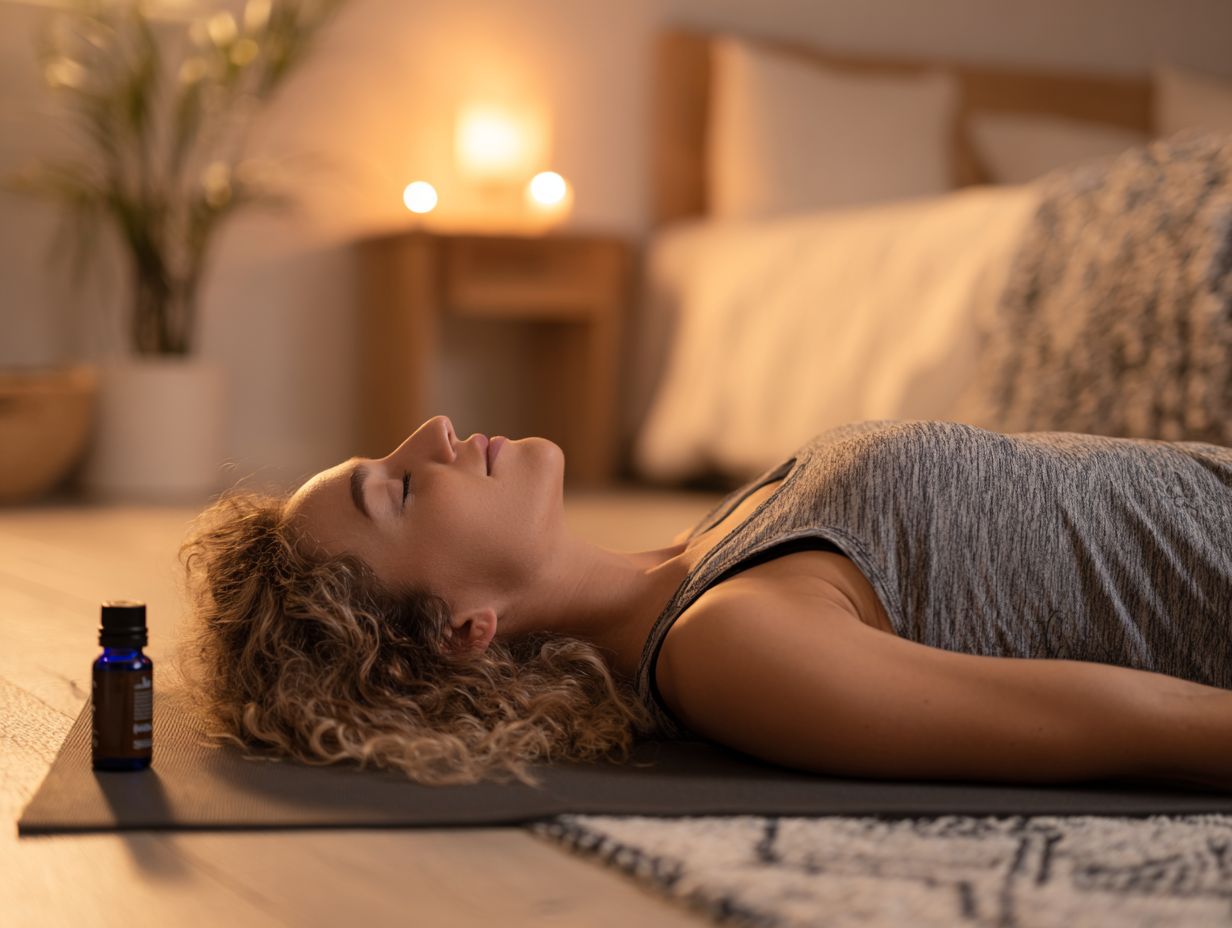
I’ve found that the timing and order of my relaxation activities can really make a difference in how well I sleep. To get the most out of my wind-down routine, I aim to start relaxing about 90 minutes before I hit the sack.
- First up, I dive into some breathing exercises for about 10 minutes, focusing on deep, slow breaths. It really helps set the mood.
- Then, around 30 minutes before I plan to sleep, I take some melatonin-usually between 0.5 and 5 mg-because I’ve noticed its effects kick in about 60 minutes after I take it, supporting circadian health.
- Finally, I spend the last 20 minutes doing gentle stretches, especially for those tight spots in my neck and shoulders.
This little structure not only gets my body ready for sleep but also helps me create a consistent nighttime ritual.
Additional Relaxation Practices
Besides just breathing and stretching, I’ve found that there are several other relaxation practices that can really boost my sleep experience and help me feel less anxious, including soothing sounds and aromatherapy.
Meditation and Mindfulness
I’ve found that meditation and mindfulness practices can really help quiet my mind and create that relaxed vibe I need for a good night’s sleep, integrating cognitive relaxation and guided imagery. To weave mindfulness meditation into my evening routine, I like to try out a few specific exercises.
- First up, I focus on deep breathing: I inhale for four counts, hold it for four, and then exhale for six. It’s surprisingly calming!
- I also enjoy doing a body scan, where I pay attention to each part of my body, letting go of tension as I go along, enhancing body awareness.
When I want a bit more guidance, I turn to apps like Headspace (which is about $12.99 a month) and Calm (around $14.99 a month). They have fantastic resources specifically designed for sleep meditation. I definitely consider using these tools to boost my relaxation game, making it so much easier to drift off at night.
Progressive Muscle Relaxation
Progressive muscle relaxation is one of my go-to techniques for shaking off physical tension. It’s pretty simple: I tense up each muscle group and then let it go, which really helps release all that built-up stress.
I usually start by finding a quiet spot where I can focus without interruptions. Then I kick things off with my feet. I tense the muscles for about five seconds, and then I relax for 30 seconds while taking some deep breaths.
From there, I move up to my calves, thighs, abdomen, and keep going all the way up to my face. I like to spend about a minute on each muscle group, which means the whole session takes me around 15 to 20 minutes.
I’ve found that this practice can really help lower anxiety and improve my sleep quality. It promotes a sense of calm and awareness, making it perfect for managing daily stress and enhancing emotional wellbeing.
Integrating Calming Techniques into Daily Life
Incorporating relaxation techniques into my daily life takes a bit of consistency and mindfulness, but I know it can lead to some lasting changes. I like to start by carving out a specific time each day, even if it’s just for 10 minutes, to practice mindfulness, breath awareness, or some deep breathing exercises.
Using apps like Calm or Headspace is a game-changer for me-they offer guided sessions that are perfect for beginners, enhancing my sleep support. I also make sure to create a calming environment: I dim the lights, eliminate noise, and sometimes even diffuse some lavender essential oil to set the mood for sensory relaxation.
Keeping a journal has been really helpful too. I jot down my progress and how I feel after each practice, which helps me connect more deeply to my relaxation journey. Over time, I’ve noticed that these small actions, combined with lifestyle habits and holistic wellness, can significantly boost my overall well-being.
Final Thoughts on Sleep Health

I’ve learned that prioritizing sleep health is crucial for both my emotional and physical well-being, and using a few handy relaxation response techniques can really help me get a more restful night’s sleep.
To boost my sleep quality, I’ve found that establishing a bedtime routine works wonders. About an hour before I hit the hay, I dim the lights to signal to my body that it’s time to wind down. Instead of scrolling through my phone, I dive into a good book or do some gentle physical stretches. I try to limit my screen time because I know that blue light can mess with my melatonin production and impact my digital wellness.
I also like to use tools like the Sleep Cycle app to track my sleep patterns and optimize my rest. Creating a cool and dark sleep-supportive environment is key too; I’ve noticed a significant improvement in my sleep quality by using blackout curtains and a white noise machine. It really makes a difference!
Frequently Asked Questions
What are some breathing techniques that can be paired with melatonin for better sleep support?
Some breathing techniques that can be paired with melatonin include deep belly breathing, alternate nostril breathing, and 4-7-8 breathing. These techniques can help calm the mind and relax the body, promoting better sleep when paired with melatonin.
Can physical stretches before bed help improve the effectiveness of melatonin?
Yes, stretching before bed can help improve the effectiveness of melatonin. Incorporating gentle stretches into your bedtime routine can help relax tense muscles and prepare your body for sleep, making melatonin more effective.
Are there specific holistic relaxation techniques that work well with melatonin?
Yes, there are many relaxation techniques that work well with melatonin. Some examples include progressive muscle relaxation, visualization, and body scan meditation. Experiment to find the technique that works best for you.
Is it necessary to take melatonin with herbal supplements or gummies, or can it be taken alone?
Melatonin can be taken alone without gummies. While gummies may be a popular and convenient option, melatonin can also be found in tablet, capsule, or liquid form. It is important to follow the recommended dosage for whichever form you choose.
How long should I wait after taking melatonin before engaging in relaxation techniques?
It is generally recommended to wait at least 30 minutes after taking melatonin before starting relaxation techniques. This allows enough time for the melatonin to be absorbed into your system and start promoting drowsiness.
Can these relaxation techniques be used for better sleep even without taking melatonin?
Yes, these breathing, stretching, and relaxation techniques can be used for better sleep even without taking melatonin. They are beneficial practices to incorporate into your bedtime routine and can help promote relaxation and better sleep on their own.