
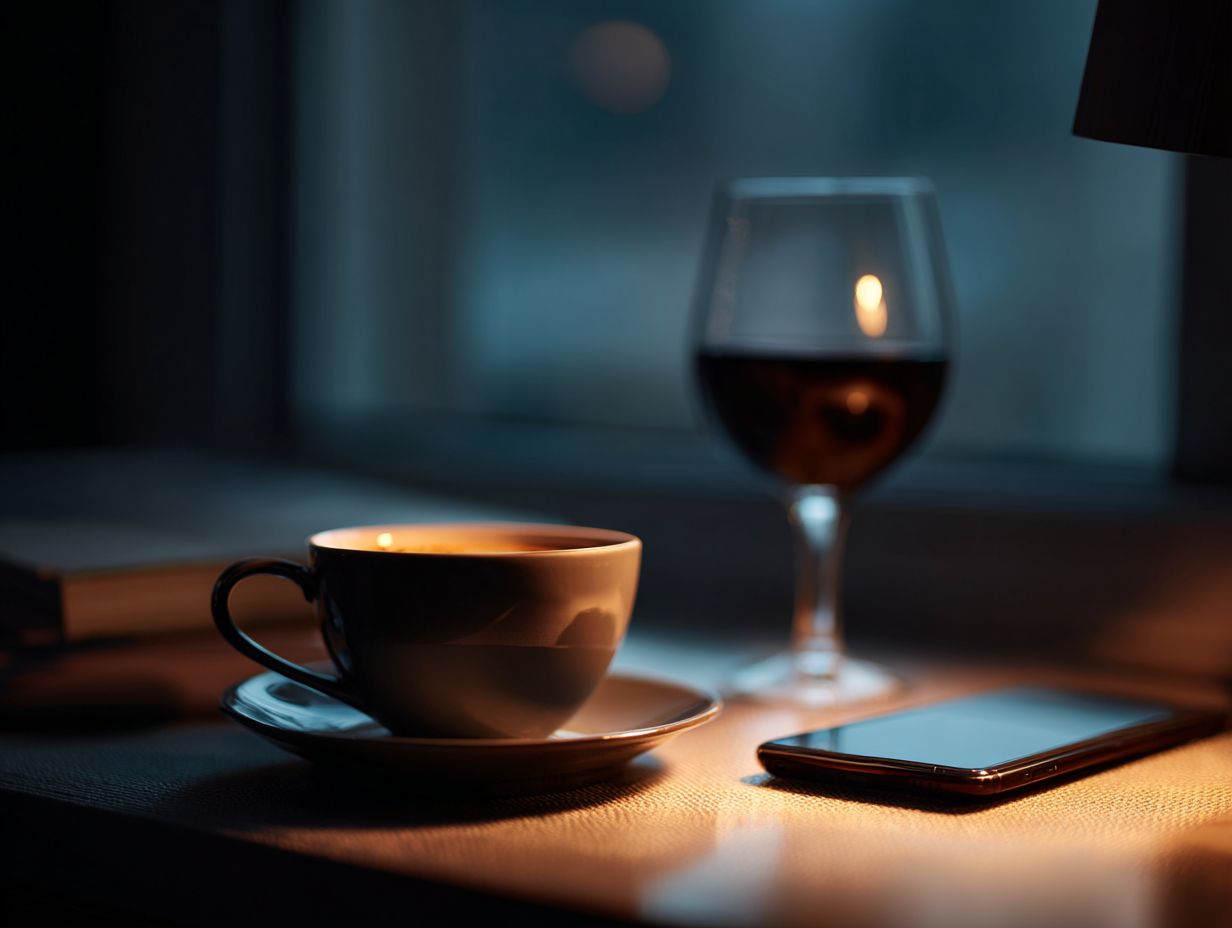
Ever found yourself wide awake at 2 a.m. scrolling through your phone, regretting that last cup of coffee? I know I have! Caffeine, alcohol, and those late-night screens have a sneaky way of sabotaging our sleep quality and disrupting our sleep patterns. Understanding how these habits clash with our body’s natural melatonin production and circadian rhythm is crucial if we want to wake up refreshed. Let’s dive into how these culprits affect our rest and explore some simple sleep strategies to reclaim our nights.
What is Melatonin?

I’ve learned that melatonin is made in the pineal gland, and its levels really depend on how much light I’m exposed to. It usually starts to rise in the evening and dips down when dawn comes. This cycle is super important for keeping my circadian rhythms in check and helping me fall asleep, ensuring better sleep quality.
I’ve noticed that bright light in the evening can really mess with melatonin production, which is a major culprit for insomnia. On the flip side, when it gets dark, my body releases more melatonin, hitting peak levels around 2 a.m.
It’s pretty interesting to know that melatonin has a half-life of about 30 to 50 minutes in my bloodstream, which highlights why I need to maintain a consistent sleeping environment.
To boost my melatonin levels naturally, I try dimming the lights about an hour before bed and cutting back on screen time. It’s made a noticeable difference in my sleep quality.
The Role of Melatonin in Sleep
Melatonin is my go-to signal that it’s time to hit the hay, acting as a natural sleep aid. It really helps me regulate my sleep-wake cycle and boosts my overall sleep quality and sleep efficiency. I’ve read that taking melatonin supplements can actually cut down the time it takes to fall asleep, reducing sleep latency, which is a game-changer for me.
In a meta-analysis I stumbled upon regarding insomnia, participants who took melatonin reported falling asleep significantly faster than those on a placebo. Pretty convincing, right? It seems like melatonin also helps enhance the overall structure of my sleep, letting me enjoy longer stretches of REM sleep, which is crucial for feeling rested and recharged.
For anyone dealing with sleep issues like delayed sleep phase syndrome, it looks like taking a dose of 0.5 to 5 mg about 30 minutes before bed can really help. Of course, I always make sure to chat with a healthcare provider before diving into any kind of supplementation.
Impact of Caffeine on Sleep
I know caffeine is a popular go-to stimulant for many of us, but I’ve realized that if it’s not managed properly, it can really mess with my sleep quality and sleep duration.
Caffeine’s Mechanism of Action
Caffeine works mainly by blocking adenosine receptors in my brain, which helps me avoid those pesky feelings of tiredness and can even delay when I feel ready to sleep, affecting my biological clock. When I have caffeine, it goes head-to-head with adenosine-a neurotransmitter that tells my body it’s time to snooze-binding to its receptors but not activating them. This little trick is what keeps me feeling more alert and awake.
I’ve noticed that the half-life of caffeine is around 5-6 hours, which means if I drink it too late in the day, it can mess with my nighttime sleep and keep me feeling wide awake when I want to wind down.
To keep that from happening, I try to limit my caffeine intake after 2 PM, especially if I’m aiming to hit the hay by 10 PM, optimizing my sleep environment. It’s been helpful to experiment with cutting back gradually to see how it affects my sleep quality.
Timing and Consumption Patterns
Consuming caffeine within six hours of bedtime can really mess with my sleep quality and even crank up insomnia symptoms if I’m sensitive to it. So, I’ve learned that timing is everything when it comes to my caffeine intake.
I try to have my last cup of coffee by 2 PM, especially if I plan to hit the hay around 10 PM.
If I’m looking for something warm to sip in the evening, I go for herbal teas like chamomile or peppermint. They help calm my mind without throwing my sleep off track.
I also keep track of my caffeine habits using apps like MyFitnessPal. It’s a helpful way to understand my consumption patterns and how they affect my rest.
In the end, listening to my body and making adjustments as needed has really helped me improve my sleep quality and personal health.
Effects of Alcohol on Sleep Quality
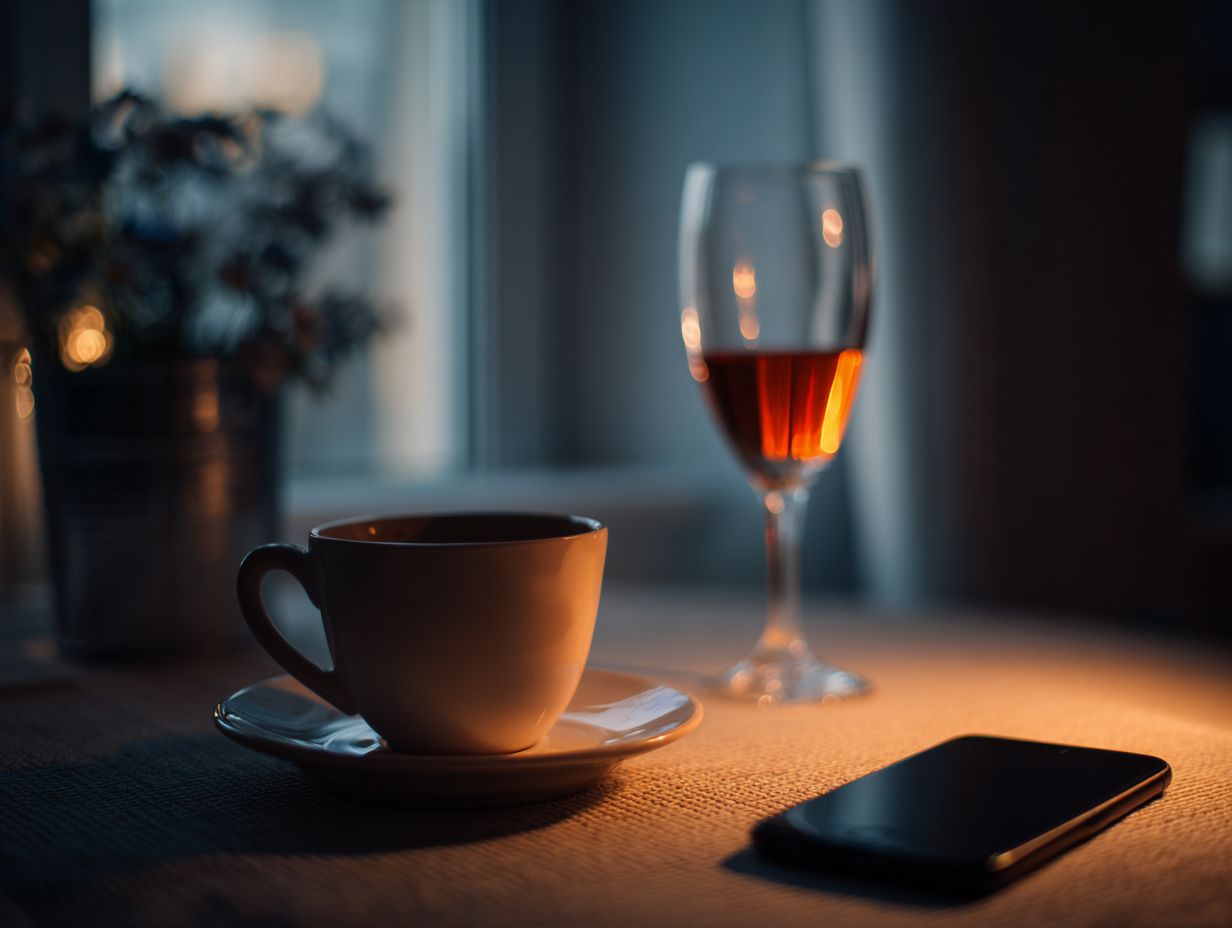
I’ve noticed that while alcohol might help me fall asleep faster, it usually ends up messing with my sleep patterns.
Instead of getting a good night’s rest, I find myself tossing and turning, which really cuts down on the overall quality of my sleep, leading to sleep deprivation.
How Alcohol Disrupts Sleep Cycles
I’ve noticed that drinking alcohol can really mess with my sleep. It tends to decrease REM sleep and makes it more likely that I’ll wake up during the night, which means I’m not getting that restorative sleep I need.
There’s some interesting research out there that shows even moderate drinking can cut REM sleep by up to 20%. For example, a study published in “Alcoholism: Clinical & Experimental Research” found that people who had a drink before bed often ended up with fragmented sleep, waking up more frequently throughout the night.
This disruption doesn’t just impact how rested I feel; it also affects my cognitive function and mood the next day. I find myself struggling with memory and feeling more irritable.
To tackle these issues, I try to limit my alcohol intake, especially in the hours leading up to bedtime, and I make it a point to stick to a regular sleep routine to help improve my overall sleep quality.
Short-Term vs. Long-Term Effects
I’ve noticed that while alcohol might help me feel sleepy in the short term, using it regularly is a different story. It’s heavily linked to chronic sleep disturbances and other health risks.
I mean, regular drinking can really mess with my body’s circadian rhythm, which leads to fragmented sleep and issues like insomnia. In fact, studies show that about 70% of heavy drinkers experience sleep disorders.
With time, I’ve learned that too much alcohol can not only cut down on REM sleep-which is super important for my mental health-but it can also make anxiety and depression worse.
To counteract these effects, I’ve started exploring alternatives like herbal teas or melatonin supplements. They help promote better sleep quality without the long-term downsides that come with alcohol.
Influence of Late-Night Screen Time
I’ve noticed that increasing my screen time before bed really impacts my sleep quality, all thanks to the blue light that devices emit.
Blue Light and Melatonin Suppression
I’ve learned that exposure to blue light in the evening can really mess with melatonin production, making it harder for me to fall asleep, impacting sleep architecture. Research suggests that if I limit my blue light exposure two to three hours before bed, I can actually improve my sleep quality.
To tackle this, I think about using blue light blocking glasses. They filter out the harmful wavelengths and let the good stuff through, which is pretty neat.
I also like the idea of installing apps like f.lux on my devices. They adjust the screen brightness and color temperature depending on the time of day.
When I put these strategies together, I can create a much better sleep environment, which means I might just drift off to dreamland a little earlier and wake up feeling well-rested.
Recommended Screen Time Guidelines

To promote better sleep hygiene, I find it really helps to limit my screen time at least an hour before bed. Instead of scrolling through my phone or binge-watching shows, I like to engage in relaxing activities that enhance my evening routine, promoting healthy sleep habits. Reading a physical book or listening to some calming music helps me unwind, reducing psychological effects of screen exposure.
I’ve also discovered that gentle yoga or meditation can work wonders in reducing stress and getting my mind ready for sleep.
To make this transition easier, I set a nightly alarm for an hour before bedtime. It’s a great little reminder to turn off my devices and switch to these healthier alternatives. Over time, I’ve definitely noticed an improvement in the quality of my sleep and my overall well-being.
Strategies for Better Sleep Hygiene
I’ve found that implementing effective sleep hygiene strategies can really make a difference in my sleep quality and overall well-being.
Reducing Caffeine and Alcohol Intake
I’ve found that cutting back on caffeine and alcohol, especially in the hours leading up to bedtime, really helps me fall asleep faster and improves the overall quality of my sleep.
To effectively reduce my caffeine intake, I’ve started swapping my usual coffee for herbal teas like chamomile or peppermint, which are naturally caffeine-free. I try to stop any caffeine by early afternoon so it doesn’t keep me up at night.
Regarding alcohol, I’ve been experimenting with non-alcoholic alternatives like sparkling water infused with fruit or some tasty herbal mocktails. I also make it a point to put down any beverages at least three hours before I hit the hay.
I’ve read that cutting these substances can actually lead to a 20% improvement in sleep quality, and honestly, these little adjustments are totally worth it.
Managing Screen Time Before Bed
Establishing a screen-free wind-down period has really helped me signal to my body that it’s time to get ready for sleep. To create an effective wind-down routine, I’ve started to implement a few specific actions.
- I set a screen time limit using apps like Stay Focused or Forest. These tools help manage technology usage and improve my sleep hygiene by tracking and restricting my usage after a certain hour, which is a game changer.
- I make sure to carve out at least 30 minutes before bed for relaxing activities. I love diving into a good book, practicing some gentle yoga, or meditating. This transition not only cuts down on blue light exposure but also calms my mind, which really boosts my sleep quality and helps regulate my circadian rhythm.
I’ve found that experimenting with different activities helps me figure out what really helps me unwind the best, ultimately enhancing my sleep duration and reducing sleep latency.
Summary of Key Takeaways
The journey to better sleep for me involves understanding melatonin’s role, managing my caffeine and alcohol intake, and cutting down on late-night screen time. These lifestyle choices are crucial for maintaining a healthy sleep-wake cycle and preventing sleep disorders such as insomnia. I’ve found that having a consistent bedtime routine really helps signal to my body that it’s time to wind down.
I like to take a warm bath or dive into a good book to help me relax, which is essential for maintaining my sleep architecture and ensuring restorative sleep.
Creating a sleep-friendly environment is also key. I keep my bedroom cool, dark, and quiet, which is vital for sleep optimization. Blackout curtains work wonders for blocking out light, and a white noise machine really helps mask any disruptive sounds that might wake me up, improving my sleep efficiency.
I try to limit my caffeine intake after 2 PM and steer clear of alcohol close to bedtime because both can really mess with my sleep quality and disrupt my circadian rhythm, leading to sleep deprivation and restlessness. Making these little changes has done wonders for my nightly rest.
Frequently Asked Questions
1. What is melatonin and how does it affect our sleep?
Melatonin is a hormone that helps regulate our sleep-wake cycle and is produced naturally in our bodies. It plays a significant role in managing our biological clock and maintaining hormonal balance for optimal sleep quality. It is important for promoting deep, restful sleep and ensuring a healthy sleep schedule, which is integral to overall mental health and cognitive function.
2. How does caffeine disrupt our melatonin levels?
Caffeine is a stimulant that can delay the release of melatonin in the body, making it harder to fall asleep and disrupting our natural sleep patterns. Consuming caffeine too close to bedtime can significantly decrease the quality and duration of our sleep, negatively impacting sleep architecture and sleep patterns.
3. Does alcohol have an impact on melatonin production?
Yes, alcohol can also interfere with melatonin production and disrupt our sleep patterns. While alcohol initially acts as a sedative and may make it easier to fall asleep, it can disrupt the natural release of melatonin, leading to poorer quality sleep and potential substance use issues.
4. Are late-night screens really that harmful to our melatonin production?
Yes, the blue light emitted from electronic screens, such as phones, computers, and TVs, can suppress the production of melatonin and make it harder to fall asleep. It is best to avoid screens at least 30 minutes before bedtime to promote healthy melatonin levels and avoid the negative effects of blue light exposure on sleep efficiency.
5. Can changing our habits with caffeine, alcohol, and screens improve our melatonin levels?
Absolutely! By limiting or avoiding caffeine and alcohol close to bedtime and reducing screen time at night, we can promote a more natural release of melatonin and improve the quality of our sleep, enhancing our overall sleep hygiene and sleep patterns.
6. Is there any way to counteract the negative effects of caffeine, alcohol, and screens on melatonin?
One way to counteract these habits is to establish a consistent sleep schedule and create a relaxing bedtime routine, which can act as effective sleep interventions. This can help regulate melatonin levels and promote better sleep, supporting the body’s natural circadian rhythm and reducing sleep disruption. Additionally, some natural supplements, such as melatonin itself, can help promote healthy sleep patterns and improve sleep duration and sleep quality assessment. However, it’s always best to consult with a healthcare professional before taking any supplements.